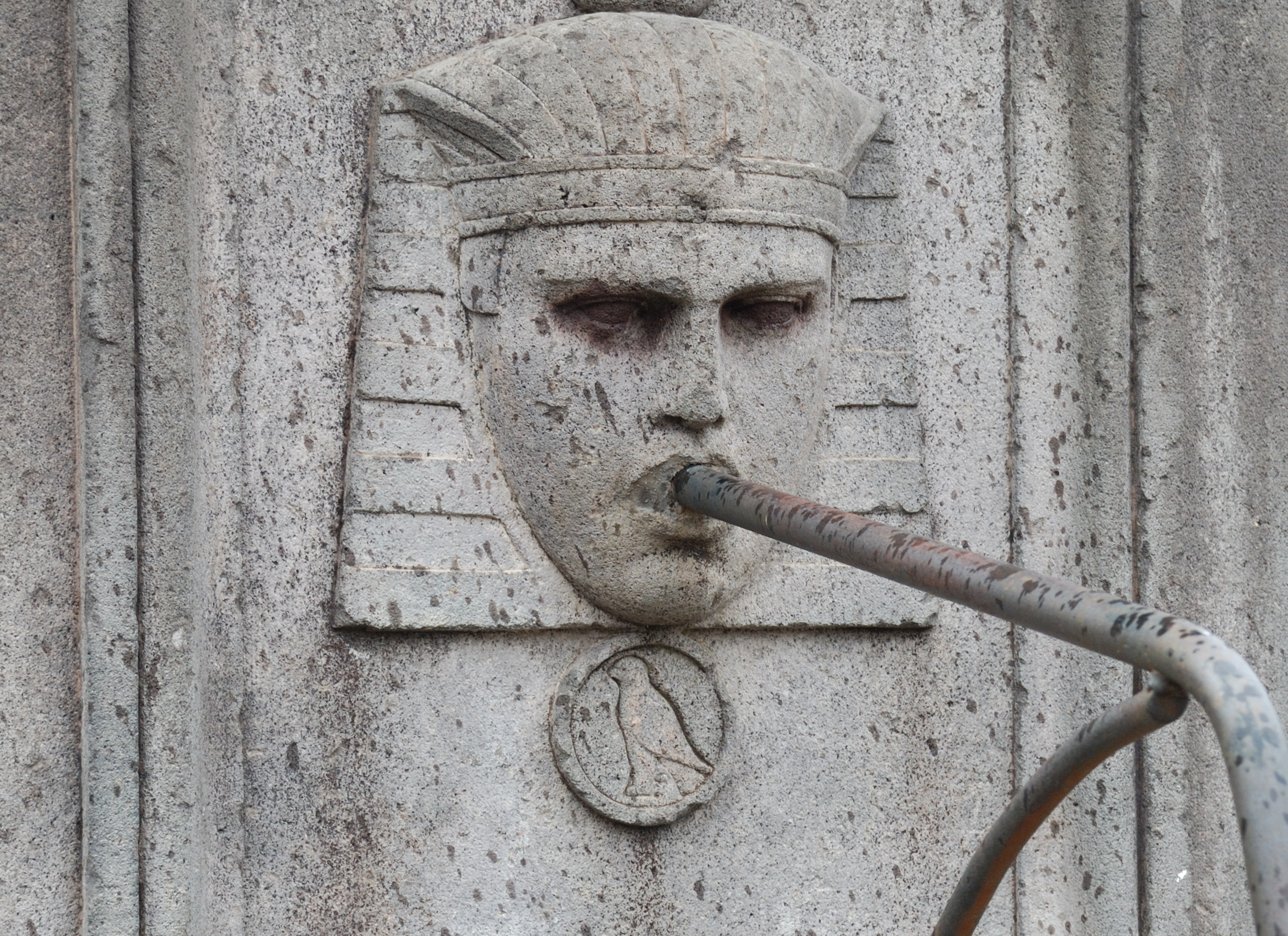
Fontaine Desaix – A Hidden 19th‑Century Egyptian‑Style Fountain in Auvergne, France
Discover the stone‑lava masterpiece that pays tribute to a Napoleonic hero, nestled in the charming town of Combronde.
Introduction
If you think Auvergne’s rugged volcanic landscapes are only about dramatic peaks and steaming springs, think again. Tucked away in the historic centre of Combronde, the Fontaine Desaix (coordinates 45.979963, 3.087597) is a striking 19th‑century fountain that blends Egyptian exoticism with French patriotic memory. Its dark lava stone, bold geometry, and the story of General Louis Charles Antoine Desaix make it a must‑see stop for cultural travelers, history buffs, and anyone chasing off‑the‑beaten‑path photo opportunities in the heart of Auvergne‑Rhône‑Alpes.
About Fontaine Desaix
A stone‑lava monument with an Egyptian flair
The Fontaine Desaix was erected in the 1800s, during a period when European fascination with ancient Egypt—known as Egyptomania—inspired architects and sculptors to reinterpret classical motifs. Crafted from lava stone, a material abundant in the volcanic Auvergne region, the fountain’s dark, porous texture gives it a timeless, almost mystical aura. Its design incorporates typical Egyptian elements—stepped basins, stylised lotus buds, and a hieratic sense of proportion—yet it remains unmistakably French in purpose.
Honouring a Napoleonic hero
The fountain is dedicated to General Louis Charles Antoine Desaix (1768‑1800), a celebrated commander who served under Napoleon Bonaparte during the Egyptian Campaign. Desaix earned a reputation as the “commandant of Haute‑Égypte” for his leadership in the Levant. Though he fell at the Battle of Waterloo, his legacy lived on in the towns he inspired. By naming the fountain after him, the citizens of Combronde linked their local landmark to a broader narrative of French military glory and the romantic allure of Egypt.
Historical significance
- 19th‑century public art – At a time when many French towns were modernising their public spaces, the fountain served both as a source of clean water and as a civic statement of cultural refinement.
- Architectural rarity – Few French fountains combine Egyptian revival style with locally sourced lava stone, making Fontaine Desaix a unique example of regional craftsmanship meeting international trends.
- Cultural memory – The monument reflects how 19th‑century France commemorated its heroes, turning everyday infrastructure into a canvas for national pride.
For a deeper dive, the French‑language Wikipedia entry offers additional context: Fontaine Desaix (Michel Channeboux).
How to Get There
By air
The nearest major airports are Clermont‑Ferrand Auvergne Airport (CFE) (≈ 70 km north) and Lyon–Saint‑Exupéry Airport (LYS) (≈ 150 km east). From either airport, rent a car or take a regional train to Combronde.
By train
Combronde is served by the TER Auvergne line (Puy‑de‑Dôme – Bourges). The Combronde station lies just a short walk (≈ 10 minutes) from the town centre where the fountain stands. Check the SNCF website for up‑to‑date timetables.
By car
- From Clermont‑Ferrand: Take the A71 north toward Moulins, exit at Combronde (exit 14). Follow the D2080 into town; the fountain sits near the central square, easily spotted on any local map.
- From Lyon: Drive north on the A89, then switch to the A71 at Bourg‑en‑Bresse. The total drive is about 2 hours.
Parking is available in the public lot behind the town hall or on the street (pay‑and‑display meters).
By bike or on foot
Combronde’s compact historic centre makes the fountain a pleasant walking destination. The EuroVelo 6 cycling route passes nearby, offering a scenic ride through the volcanic plateau before arriving at the fountain’s stone base.
Best Time to Visit
| Season | Why it works | Tips |
|---|---|---|
| Spring (April‑June) | Mild temperatures (12‑20 °C) and blooming alpine flora create a vibrant backdrop. | Bring a light jacket; early mornings are less crowded. |
| Summer (July‑August) | Long daylight hours (up to 16 h) give ample time for photography. | Stay hydrated; the lava stone can become warm in direct sun. |
| Autumn (September‑October) | Golden foliage adds contrast to the dark stone, and tourist numbers dip. | Pack a scarf for cooler evenings; perfect for sunset shots. |
| Winter (November‑March) | Snow‑capped volcanic hills provide a dramatic, rarely photographed setting. | Check opening conditions of nearby attractions; daylight is limited. |
Overall, late spring to early autumn offers the most comfortable weather for strolling through Combronde and exploring surrounding springs.
What to Expect
Arriving at the Fontaine Desaix, you’ll first notice the fountain’s contrasting textures: the rough, porous lava stone against the smooth water flow. The water, sourced from municipal supply, cascades over the Egyptian‑style tiers, creating a gentle, rhythmic sound that echoes through the narrow cobblestone streets.
The surrounding square is often dotted with locals enjoying a café, street musicians, and occasional market stalls selling regional cheeses and Auvergne wines. The atmosphere feels both historic and lived‑in—an authentic slice of French provincial life.
Photographers will love the play of light and shadow on the stone, especially during the golden hour when the sun filters through nearby medieval façades. The fountain’s modest size makes it an intimate subject, perfect for close‑up detail shots of the Egyptian motifs or wide‑angle frames that capture the bustling square.
Because the fountain is a public monument, there is no admission fee, and it remains accessible year‑round, day and night (though the water may be turned off for maintenance in the winter months).
Nearby Attractions
While you’re in the area, consider extending your itinerary to include these natural and historic sites—each within a short drive or bike ride from the fountain.
- Lavoir (fountain) – 1.7 km away. A traditional communal washhouse that showcases historic rural life.
- Source Saint‑Pierre (spring) – 2.8 km away. Crystal‑clear water emerges from volcanic rock, perfect for a short nature walk.
- Source ferrugineuse – le puits qui bout (spring) – 3.0 km away. Known for its iron‑rich waters that bubble up from deep underground.
- Source Chauteloze (eau ferrugineuse) (fountain) – 3.4 km away. A quirky, rust‑colored spring with a fascinating local legend.
- Source eau ferrugineuse (spring) – 3.5 km away. Another iron‑laden spring, ideal for geology enthusiasts.
These sites are all part of the Auvergne volcanic landscape, offering a blend of geological wonders and cultural heritage.
Travel Tips
- Carry cash – Small cafés and market stalls in Combronde often prefer cash (euros).
- Dress in layers – Weather can shift quickly in the mountains; a light jacket and a breathable shirt work best.
- Respect the water – While the fountain is public, avoid swimming or stepping directly into the basin to preserve its historic stone.
- Timing for photos – Early morning or late afternoon provides soft lighting and fewer crowds.
- Local cuisine – Try the Aligot (a cheesy potato purée) and Saint‑Nectaire cheese, both specialties of the Auvergne region.
- Language – Basic French phrases (e.g., Bonjour, Merci, Où est la fontaine?) go a long way with locals.
- Stay connected – Mobile coverage is generally good in Combronde, but download offline maps just in case you venture into remote spring areas.
Wrap‑up
The Fontaine Desaix may not appear on every travel brochure, but its blend of Egyptian‑style elegance, volcanic stone, and Napoleonic homage makes it a hidden gem worth seeking out. Whether you’re wandering the historic streets of Combronde, tracing the volcanic springs of Auvergne, or simply hunting for a quiet spot to sip a café au lait while people‑watching, this 19th‑century fountain offers a uniquely French experience.
Pack your camera, follow the coordinates, and let the whispers of lava stone and flowing water guide you through one of Auvergne’s most enchanting corners. Happy travels!