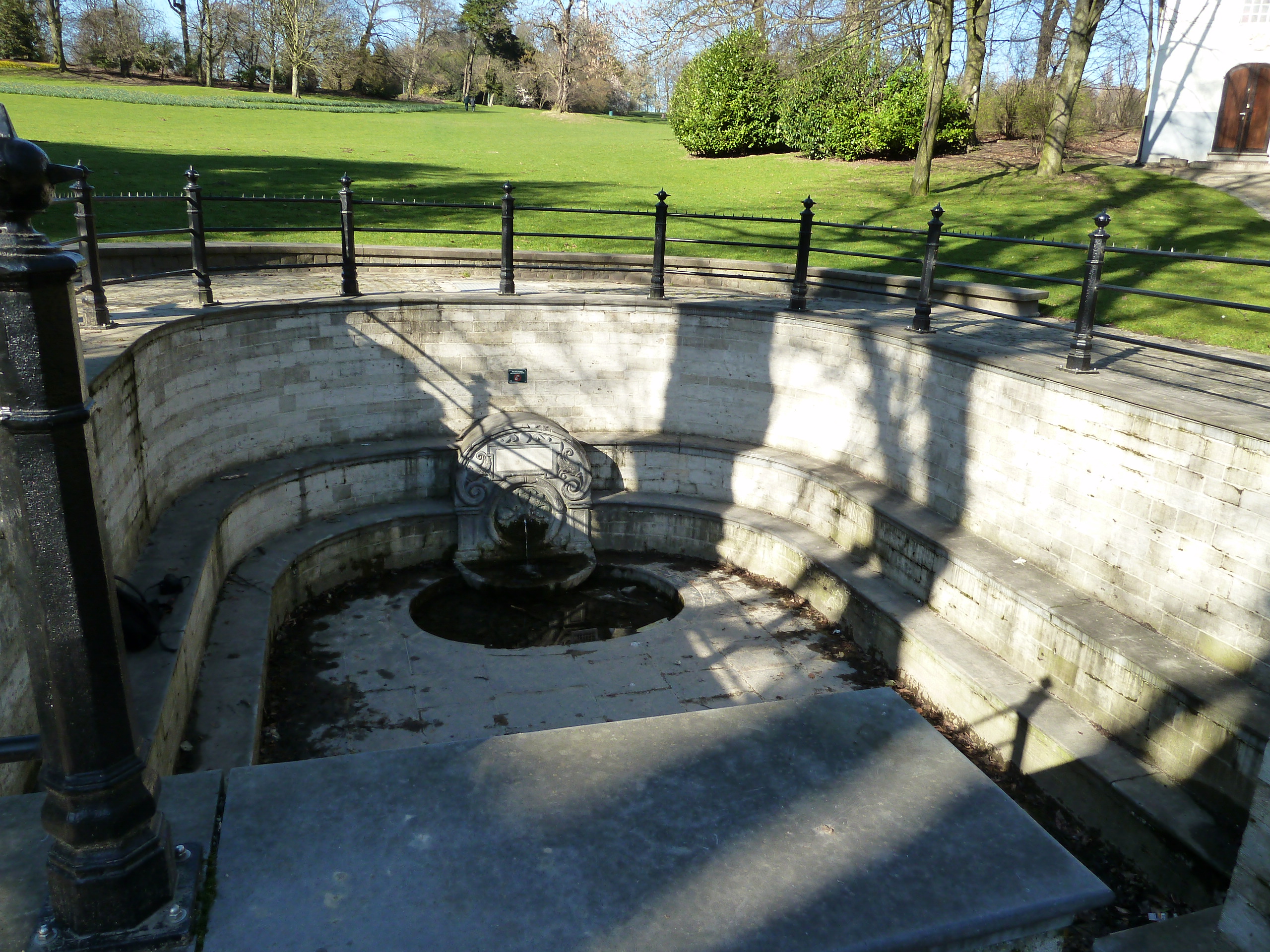
Fontaine Sainte‑Anne – Sint‑Annabron: A Hidden Jewel in Brussels
Discover the charm of this tranquil fountain, tucked away in the leafy heart of Laeken, and learn how to make the most of your Brussels itinerary.
Introduction
If you think Brussels is only about grand squares, chocolate‑covered waffles, and towering Atomium silhouettes, think again. A short stroll away from the bustling city centre lies a serene oasis that many travelers overlook: Fontaine Sainte‑Anne – Sint‑Annabron. This modest yet elegant fountain offers a quiet moment of reflection amid the capital’s vibrant streets, making it a perfect spot for photographers, history buffs, and anyone craving a breath of fresh air. In this guide, we’ll explore the fountain’s story, how to reach it, the best time to visit, and what else you can discover nearby.
About Fontaine Sainte‑Anne – Sint‑Annabron
A brief description
Located at 50.887376 N, 4.352759 E in the Brussels‑Capital Region, the Fontaine Sainte‑Anne – Sint‑Annabron is a classic stone fountain that blends seamlessly with the surrounding residential streets of Laeken (Laken). Though its exact height and altitude remain undocumented, the fountain’s simple design—featuring a modest basin and a gently flowing water jet—exudes a timeless elegance that reflects the historic character of the neighbourhood.
Historical background
The fountain’s name pays homage to Saint Anne, a revered figure in Catholic tradition, while the Dutch name Sint‑Annabron translates to “Saint Anne’s well.” This dual‑lingual naming mirrors Brussels’ bilingual culture, where French and Dutch coexist side by side. Although specific construction dates are scarce, the fountain is believed to have been installed during the early 20th century as part of a municipal effort to provide clean drinking water and decorative public spaces throughout the city’s expanding districts.
Cultural significance
Beyond its functional role, Fontaine Sainte‑Anne serves as a communal gathering point for locals. Children play near its rim, elderly residents pause for a chat, and visitors often sit on nearby benches to enjoy the soothing sound of water. Its presence underscores Brussels’ commitment to preserving small‑scale urban green spaces, which contribute to the city’s reputation as a “green capital” in Europe.
How to Get There
By public transport
- Metro: Take Line 2 or Line 6 to the “Simonis (Elisabeth)” station. From there, it’s a 10‑minute walk (≈ 800 m) north‑east along Avenue de la Reine/Koninginnelaan toward Rue de la Brabançonne/Brabantseweg.
- Tram: Tram 7 stops at “Stade” (Stadium). Alight and walk south‑west for about 5 minutes.
- Bus: Bus 71 or 80 also serve the Laeken area; get off at the “Sint‑Annabron” stop, which places you right at the fountain’s doorstep.
By bike or on foot
Brussels boasts an extensive network of bike lanes and rented bike stations (Villo!). From the city centre (Grand‑Place), you can cycle along Rue des Bouchers/Spijkerstraat and Avenue du Roi/Koningslaan—a pleasant 4‑km ride that takes roughly 15 minutes.
If you prefer walking, the route from Place du Luxembourg to the fountain is about 2.5 km and takes 30 minutes, allowing you to soak up the leafy streets of Laeken along the way.
Driving & parking
Limited street parking is available on Rue du Petit Lillois/Lilleweg and nearby side streets. However, traffic can be heavy during rush hour, so public transport is usually the smoother option.
Best Time to Visit
- Spring (March–May): The surrounding trees burst into bloom, and the fountain’s water reflects the fresh green canopy—ideal for photography.
- Summer (June–August): Warm evenings make the fountain a refreshing spot to cool down. Early mornings are quieter before the tourist rush.
- Autumn (September–November): Golden foliage adds a romantic backdrop; the cooler weather makes strolling pleasant.
- Winter (December–February): While the fountain may be partially frozen, the surrounding area is still charming, especially during the Brussels Christmas market season.
Overall, early mornings on weekdays provide the most tranquil experience, regardless of the season.
What to Expect
Arriving at Fontaine Sainte‑Anne – Sint‑Annabron, you’ll be greeted by a modest stone basin encircled by low‑lying hedges and a few wrought‑iron benches. The water flows steadily from a central nozzle, creating a gentle, rhythmic sound that drowns out city noise.
- Photographic moments: The fountain’s clean lines work well with both wide‑angle shots of the surrounding streets and close‑ups that capture water droplets against the stone.
- Local ambience: Expect a relaxed vibe—residents often sit nearby, reading newspapers or chatting. You may hear the occasional bicycle bell as cyclists pass.
- Accessibility: The area is wheelchair‑friendly, with smooth pavement and curb‑cuts leading directly to the fountain.
Because the fountain is not a major tourist hub, you’ll rarely encounter crowds, making it perfect for a quiet coffee break or a reflective pause during a day of sightseeing.
Nearby Attractions
While you’re in the Laeken district, consider adding these short‑walk attractions to your itinerary. All are within a 0.4–0.7 km radius, making them easy to explore on foot:
| Distance | Attraction | Approx. Walk |
|---|---|---|
| 0.4 km | Another charming fountain (unspecified) | 5 min |
| 0.5 km | Historic fountain near the Royal Greenhouses | 6 min |
| 0.5 km | Cultural fountain close to the Royal Palace of Laeken | 6 min |
| 0.6 km | Elegant water feature in the Parc de Laeken | 8 min |
| 0.7 km | Scenic fountain near the Atomium (outside the main site) | 9 min |
Tip: Use Google Maps or the local STIB-MIVB app to locate these fountains by searching “fountain near Laeken.”
Other Laeken highlights
- Royal Greenhouses of Laeken – Open only a few weeks each spring, these glass‑house marvels showcase exotic plants and stunning architecture.
- Atomium – A short tram ride away, this iconic structure offers panoramic views of Brussels.
- Parc de Laeken – A sprawling park perfect for picnics, jogging, and spotting the Royal Castle.
Travel Tips
- Carry cash for small purchases – Many local cafés and kiosks near the fountain accept only cash or contactless cards.
- Stay hydrated – While the fountain is decorative, the water is not intended for drinking. Bring a reusable bottle.
- Mind the weather – In summer, the stone can become hot; wear comfortable shoes and consider a sun hat.
- Respect local customs – Laeken is a residential area; keep noise levels low, especially after 10 pm.
- Use a multilingual map – Brussels signage appears in French, Dutch, and often English; a bilingual map (available at tourist offices) helps navigate the Sainte‑Anne / Sint‑Annabron signs.
- Photography etiquette – If you’re using a tripod, check that it does not obstruct foot traffic.
- Safety – The neighbourhood is safe during daylight. At night, stick to well‑lit streets and consider using a rideshare service if you’re traveling alone.
Wrap‑Up
Fontaine Sainte‑Anne – Sint‑Annabron may not headline the typical “must‑see” list for Brussels, but that’s exactly why it deserves a spot on your travel itinerary. Its peaceful setting, easy accessibility, and proximity to other Laeken attractions make it an ideal micro‑stop for those who love to wander off the beaten path.
Next time you’re exploring the Belgian capital, trade the crowds of Grand‑Place for the gentle murmur of this hidden fountain. You’ll leave with a fresh perspective on Brussels—one that blends historic charm, local life, and the simple pleasure of watching water dance over stone.
Ready to plan your visit? Grab a map, hop on the tram to Laeken, and let Fontaine Sainte‑Anne – Sint‑Annabron become your secret Brussels sanctuary.