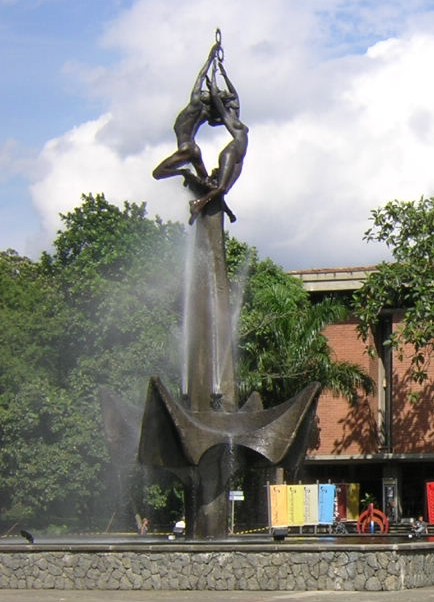
El Hombre creador de energía – Medellín’s Iconic Bronze Fountain
If you’re wandering the leafy campus of the Universidad de Antioquia and hear the gentle roar of water, you’ve probably stumbled upon one of Medellín’s most striking public artworks: El Hombre creador de energía. This 18‑meter‑tall bronze masterpiece is more than just a fountain—it’s a celebration of science, culture, and the city’s vibrant spirit.
About El Hombre creador de energía
A brief description
- Type: Fountain ⛲
- Material: Bronze casting with a concrete core
- Dimensions: 18 m high × 6 m wide
- Year of installation: 1971
- Location: Between blocks 8 (Biblioteca), 15 (Museo), 23 (Teatro) and the central Plazoleta of the Universidad de Antioquia, Medellín, Antioquia, Colombia
- Coordinates: 6.267326, -75.569312
The sculpture depicts a larger‑than‑life figure—often interpreted as a “creator of energy”—standing tall, arms outstretched, as water cascades from its form. The bronze surface catches the Andean sun, creating a shimmering play of light that makes the figure appear alive.
Historical context
Commissioned in the early 1970s, the fountain was part of a broader urban‑cultural initiative to integrate art into public spaces across Medellín. The Universidad de Antioquia, one of Colombia’s oldest and most prestigious institutions, became a natural home for the work, symbolizing the university’s dedication to scientific inquiry and artistic expression.
Since its inauguration in 1971, El Hombre creador de energía has witnessed the city’s transformation—from a period of industrial growth to the modern, innovative metropolis Medellín is today. The fountain remains a beloved meeting point for students, locals, and tourists alike, serving as a reminder that creativity and knowledge generate the “energy” that drives a community forward.
Why it matters
- Cultural significance: The piece bridges the worlds of art and engineering, echoing the university’s interdisciplinary ethos.
- Architectural landmark: Its imposing height makes it a visual anchor for the campus, visible from several surrounding blocks.
- Community hub: The surrounding Plazoleta is a popular spot for outdoor lectures, performances, and casual gatherings, all framed by the fountain’s soothing water flow.
How to Get There
By public transportation
| Mode | Details |
|---|---|
| Metro (Metró) – Line A | Get off at Universidad station (the stop closest to the campus). The fountain is a 5‑minute walk north, following signs for “Bloque 8 – Biblioteca”. |
| Buses (SITP) | Routes 70, 71, 73, 75 stop at “Universidad de Antioquia”. Check the latest SITP app for real‑time schedules. |
| Taxis / Ride‑hailing | Request a drop‑off at “Universidad de Antioquia, Bloque 8”. Most drivers know the campus layout, and the ride from downtown Medellín takes about 10‑15 minutes. |
By foot or bike
If you’re staying in the El Poblado or Laureles neighborhoods, the university campus is easily reachable via the Ciclovía network—bike lanes that connect major districts. The walk from the city center (Plaza Botero) to the fountain takes roughly 25 minutes, passing by the iconic Museo de Antioquia and the Parque Berrío.
Parking
Limited surface parking is available near the Biblioteca block, but it fills quickly during class hours. For a stress‑free visit, public transport or a ride‑share is recommended.
Best Time to Visit
Seasonal considerations
- Dry season (December – March, July – August): Clear skies and lower humidity make the bronze surface sparkle, and the water jets are fully operational. This is the peak tourist period, so expect more visitors.
- Rainy season (April – June, September – November): Light showers add a romantic mist to the fountain, but occasional heavy rain may temporarily shut off the water feature for safety.
Time of day
- Morning (8 am – 10 am): The light is soft, perfect for photography, and the campus is quieter.
- Late afternoon (4 pm – 6 pm): The sun casts a golden glow on the bronze, and the surrounding Plazoleta fills with students winding down after classes.
- Evening (7 pm onward): The fountain is illuminated, creating a dramatic silhouette against the night sky—ideal for a romantic stroll or night‑time shoot.
What to Expect
Arriving at El Hombre creador de energía, you’ll first notice the rhythmic sound of water echoing across the plaza. The fountain’s design encourages interaction: children love to run along the shallow basin, while photographers chase the glimmering spray.
The surrounding Plazoleta central is lined with benches, shaded by mature trees, making it a comfortable spot for a coffee break. During university events—art exhibitions, scientific fairs, or live music performances—the area buzzes with activity, offering a genuine glimpse into Medellín’s academic and cultural life.
If you pause long enough, you may hear the faint hum of the water pumps, a subtle reminder of the engineering marvel that keeps the fountain alive. The bronze figure itself, with its dynamic posture, feels almost kinetic, as if the water is the “energy” it creates and controls.
Nearby Attractions
While you’re in the vicinity, consider adding these short‑distance gems to your itinerary. All are within a 2‑km radius, making them perfect for a relaxed walking tour.
- [Fountain – 1.2 km away] – Another charming water feature nestled in a residential park.
- [Fountain – 1.5 km away] – A modernist sculpture with interactive lighting.
- [Weir – 1.6 km away] – A small historic weir that showcases traditional Antioquian water management.
- [Fountain – 1.6 km away] – A family‑friendly fountain surrounded by playground equipment.
- [Plazoleta de las Esculturas – 1.7 km away] – An open‑air gallery featuring rotating contemporary sculptures, perfect for art lovers.
(If you’re using a smartphone, a quick Google Maps search for each name will provide exact directions and opening hours.)
Travel Tips
| Tip | Details |
|---|---|
| Bring a reusable water bottle | Medellín’s climate is mild, but staying hydrated is essential, especially if you’re exploring on foot. |
| Dress in layers | Mornings can be cool (around 15 °C) while afternoons warm up to 28 °C. A light jacket works well. |
| Respect campus rules | The university is an active academic space. Keep noise levels down during lecture times and avoid blocking pathways. |
| Photography etiquette | While the fountain is public, ask permission before taking close‑up shots of individuals, especially students. |
| Safety | The area is generally safe, but keep an eye on personal belongings, especially in crowded evenings. |
| Local snacks | Grab a “arepa de choclo” from a nearby kiosk on Calle 70 for a quick, tasty bite. |
| Currency | Most vendors accept cash (COP) and contactless cards. Have small bills for street food stalls. |
| Language | Spanish is the primary language. A few phrases—“¿Dónde está la fuente?” (Where is the fountain?)—go a long way. |
| Connectivity | Free Wi‑Fi is available at the university’s library; otherwise, a local SIM card offers reliable 4G coverage. |
Wrap‑up
Whether you’re a photography enthusiast chasing the perfect reflection, a student curious about campus life, or a traveler eager to discover Medellín’s hidden cultural corners, El Hombre creador de energía offers a memorable experience. Its blend of artistic grandeur, engineering ingenuity, and lively surroundings makes it a must‑see landmark in the heart of Antioquia.
Plan your visit, soak in the fountain’s energizing ambiance, and let the bronze creator inspire your own journey through this dynamic Colombian city. Safe travels!