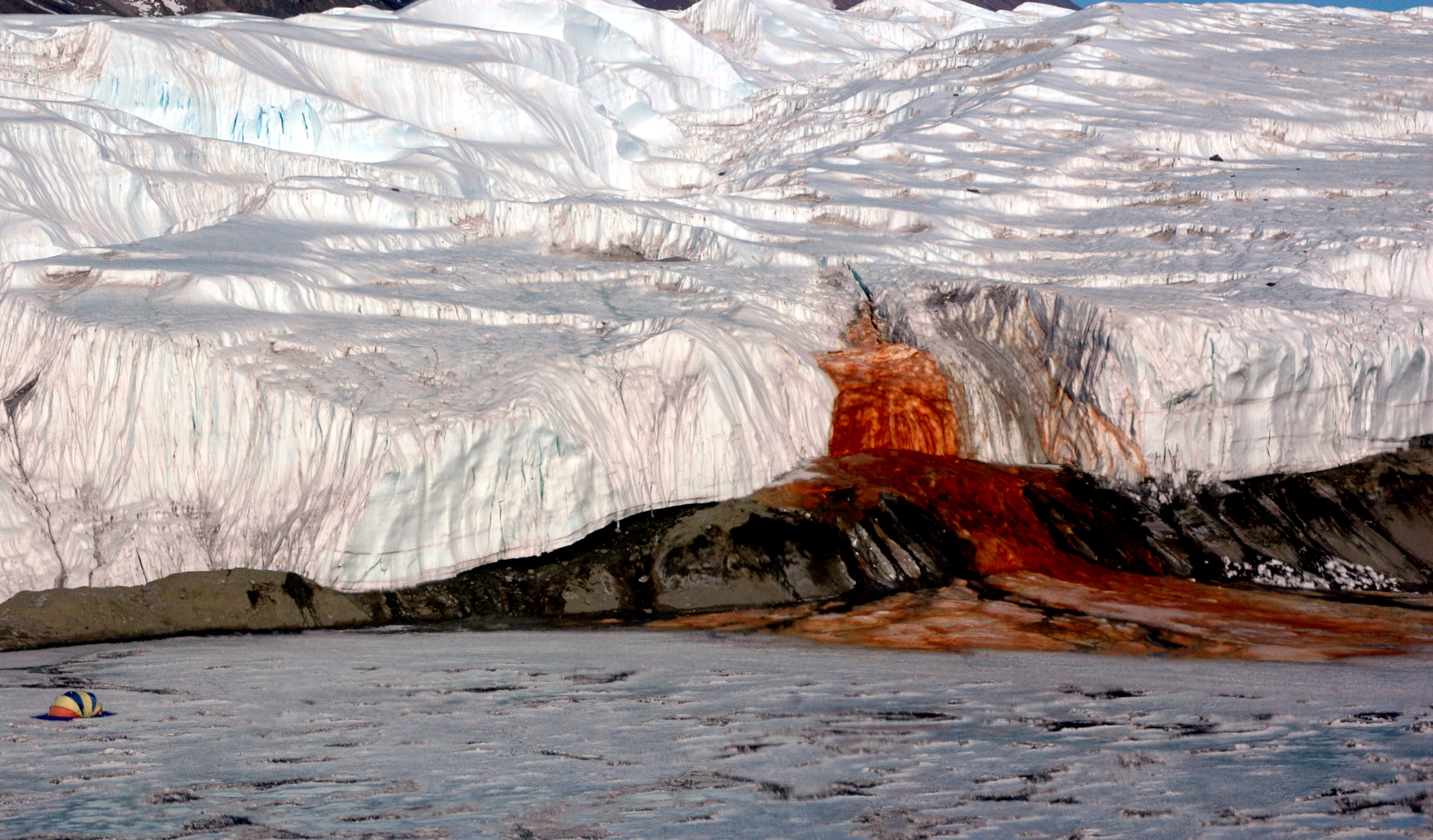
Blood Falls, Antarctica – The Crimson Cascade You’ve Never Heard Of
If you thought waterfalls were only tropical rain‑forest spectacles, think again. Deep in the frozen heart of Antarctica, a scarlet stream of iron‑rich water tumbles out of a glacier, creating a surreal, other‑worldly sight that looks like a scene from a sci‑fi movie. Welcome to Blood Falls – the most hauntingly beautiful waterfall on the continent.
1. Introduction
Imagine standing on a stark, white glacier and watching a vivid, rust‑colored river spill over the edge, staining the ice a deep, metallic red. The contrast is so dramatic that early explorers named it “Blood Falls,” even though no actual blood ever flows there. This icy waterfall is perched just a short walk from McMurdo Station, the largest U.S. research outpost in Antarctica, making it one of the few polar natural wonders that adventurous travelers can actually see up close.
In this guide we’ll dive into the science behind the crimson cascade, share how you can reach this remote site, and give you the insider tips you need to experience Blood Falls safely and responsibly. Whether you’re a seasoned polar explorer or a curious armchair traveler, this article is your one‑stop resource for everything Blood Falls.
2. About Blood Falls
What Is Blood Falls?
Blood Falls is an iron‑rich ice fall that emerges from the Taylor Glacier in the McMurdo Dry Valleys of Antarctica. The water that surfaces is not ordinary meltwater; it is a briny, oxygen‑poor solution saturated with iron. When this iron‑laden water contacts the air, it oxidizes and turns a vivid rust‑red, giving the waterfall its iconic “blood” appearance.
A Brief History
The first recorded sighting of Blood Falls dates back to the early 20th century, when British explorer Robert Falcon Scott noted the strange red stain on the glacier. Scientific curiosity grew in the 1960s when researchers from the United States Antarctic Program began sampling the water. In 2000, a team of microbiologists discovered a unique, subglacial microbial community thriving in the extreme conditions—one of the few known ecosystems that can survive without sunlight.
Why It Matters
Blood Falls is more than a photogenic oddity; it serves as a natural laboratory for studying extremophiles—organisms that live in harsh environments. Understanding how life persists in the iron‑rich, oxygen‑starved waters of Blood Falls helps scientists model potential life on icy worlds such as Europa or Enceladus. For travelers, the waterfall offers a rare glimpse into the interplay between geology, chemistry, and biology on Earth’s most remote continent.
3. How to Get There
Getting to Antarctica
Because Blood Falls sits within the McMurdo Station area (coordinates ‑77.722234, 162.273843), the most practical gateway is via the station itself. Most visitors reach Antarctica on a chartered research vessel or a military‑operated flight that departs from Chile (Punta Arenas), New Zealand (Christchurch), or Australia (Hobart). These flights land on the ice runway at McMurdo, usually on a ski‑equipped aircraft such as the LC‑130 Hercules.
Pro tip: If you’re not part of a scientific expedition, you’ll need to join a certified polar‑tour operator that holds a permit from the Antarctic Treaty System. Companies like Quark Expeditions and Adventure Network International offer limited‑group itineraries that include a day‑trip to the Dry Valleys and Blood Falls.
From McMurdo Station to Blood Falls
Once you’re on the ice runway, the waterfall is only about 0.6 km from the main station complex—essentially a short trek across the glacier. Most organized tours use snowmobiles or tracked vehicles to transport guests, followed by a brief, guided walk to the viewing platform.
Typical itinerary:
| Step | Mode of transport | Approx. time |
|---|---|---|
| Arrival at McMurdo runway | LC‑130 aircraft | — |
| Transfer to station base camp | Snowcat or all‑terrain vehicle | 15 min |
| Guided walk to Blood Falls | On foot (with crampons) | 20‑30 min |
| Viewing & photography | — | 45‑60 min |
| Return to station | Snowcat or on foot | 20‑30 min |
All participants must wear cold‑weather gear, polar‑rated boots, and gloves. Guides will provide crampons and ice axes if needed.
4. Best Time to Visit
Antarctica’s climate is extreme, but the Antarctic summer (late November to early February) offers the most favorable conditions for a Blood Falls excursion.
| Month | Daylight | Temperature (°C) | Visibility |
|---|---|---|---|
| November | 16‑18 hrs | ‑15 to ‑5 | Good |
| December | 20‑24 hrs | ‑10 to 0 | Excellent |
| January | 20‑24 hrs | ‑5 to 2 | Excellent |
| February | 16‑18 hrs | ‑10 to ‑2 | Good |
During these months, the sun hovers low on the horizon, casting a soft, golden glow that makes the red water of Blood Falls pop dramatically against the white ice. Late summer (late January–early February) often provides the warmest temperatures, but keep in mind that weather can change in minutes, so always be prepared for wind, snow, or sudden temperature drops.
5. What to Expect
The Visual Experience
As you approach the glacier’s edge, the first thing you’ll notice is the deep crimson hue flowing over the ice—a stark contrast to the surrounding snow. The water emerges from a narrow fissure, forming a thin, ribbon‑like stream that quickly spreads into a frothy cascade. Because the flow is relatively modest, the waterfall is more of a steady seep than a roaring torrent, but the color is unforgettable.
Sensory Highlights
- Sound: The waterfall is quiet; the hiss of melting ice and the occasional crack of the glacier are the only audible cues.
- Smell: A faint metallic scent may be detectable when you’re close enough, a reminder of the iron‑rich water.
- Touch: If you’re permitted to step onto the ice near the fall, the surface will be slick and cold—always follow guide instructions to avoid slipping.
Photography Tips
- Golden hour (early morning or late afternoon) gives the best contrast between the red water and the blue‑white ice.
- Use a polarizing filter to reduce glare from the ice and enhance the blood‑red tones.
- A tripod is essential for low‑light shots; exposure times can be several seconds due to limited daylight under overcast skies.
6. Nearby Attractions
While Blood Falls is the star attraction, the McMurdo Dry Valleys region offers several other points of interest that can be combined into a single day’s itinerary:
| Attraction | Distance from Blood Falls | Why Visit? |
|---|---|---|
| Taylor Glacier | Adjacent | See the glacier that feeds Blood Falls and learn about its unique ice dynamics. |
| McMurdo Station Visitor Center | 0.6 km | Get a behind‑the‑scenes look at life on Antarctica’s largest research hub. |
| Lake Hoare | ~5 km | A frozen lake that offers striking turquoise ice formations during summer melt. |
| Mount Erebus (visible from a distance) | ~70 km (viewable) | The world’s southernmost active volcano—spectacular for photography on clear days. |
For more detailed information, check the official Blood Falls Wikipedia page and the McMurdo Station visitor resources.
7. Travel Tips
| Tip | Details |
|---|---|
| Book Early | Antarctic cruise slots fill up fast. Secure your place 12‑18 months in advance. |
| Permits & Insurance | All visitors must have a Polar Travel Permit and comprehensive travel insurance covering evacuation. |
| Pack Smart | Layered, wind‑proof clothing, insulated gloves, a balaclava, and waterproof boots are non‑negotiable. |
| Stay Hydrated | The cold can mask thirst. Bring a reusable insulated water bottle and drink regularly. |
| Respect the Environment | No littering, no picking up rocks or ice, and keep a safe distance from wildlife (seals, penguins) if you encounter them. |
| Health Precautions | Altitude isn’t a concern, but the low humidity can cause dry skin and eyes. Bring a good moisturizer and lip balm. |
| Photography Gear | Spare batteries (cold drains them quickly), extra memory cards, and a weather‑sealed camera body. |
| Acclimatization | Even though the altitude is modest, the extreme cold can affect circulation. Take it easy the first day and let your body adjust. |
| Emergency Protocols | Follow all guide instructions; stations have emergency shelters and medical kits, but evacuation can take days. |
Final Thoughts
Blood Falls is a once‑in‑a‑lifetime natural wonder that combines stark polar beauty with a splash of vivid color—an Instagram‑ready scene that also tells a profound scientific story. Though reaching it requires careful planning, the experience of standing beside a crimson river flowing from a glacier is worth every mile of travel.
So, pack your warmest layers, book that Antarctic expedition, and prepare to be mesmerized by the eerie, iron‑stained cascade that has captured the imagination of explorers for over a century. Blood Falls isn’t just a waterfall; it’s a reminder that even the most remote corners of our planet hold secrets waiting to be discovered.
Happy travels, and may your Antarctic adventure be as unforgettable as the scarlet waters of Blood Falls!