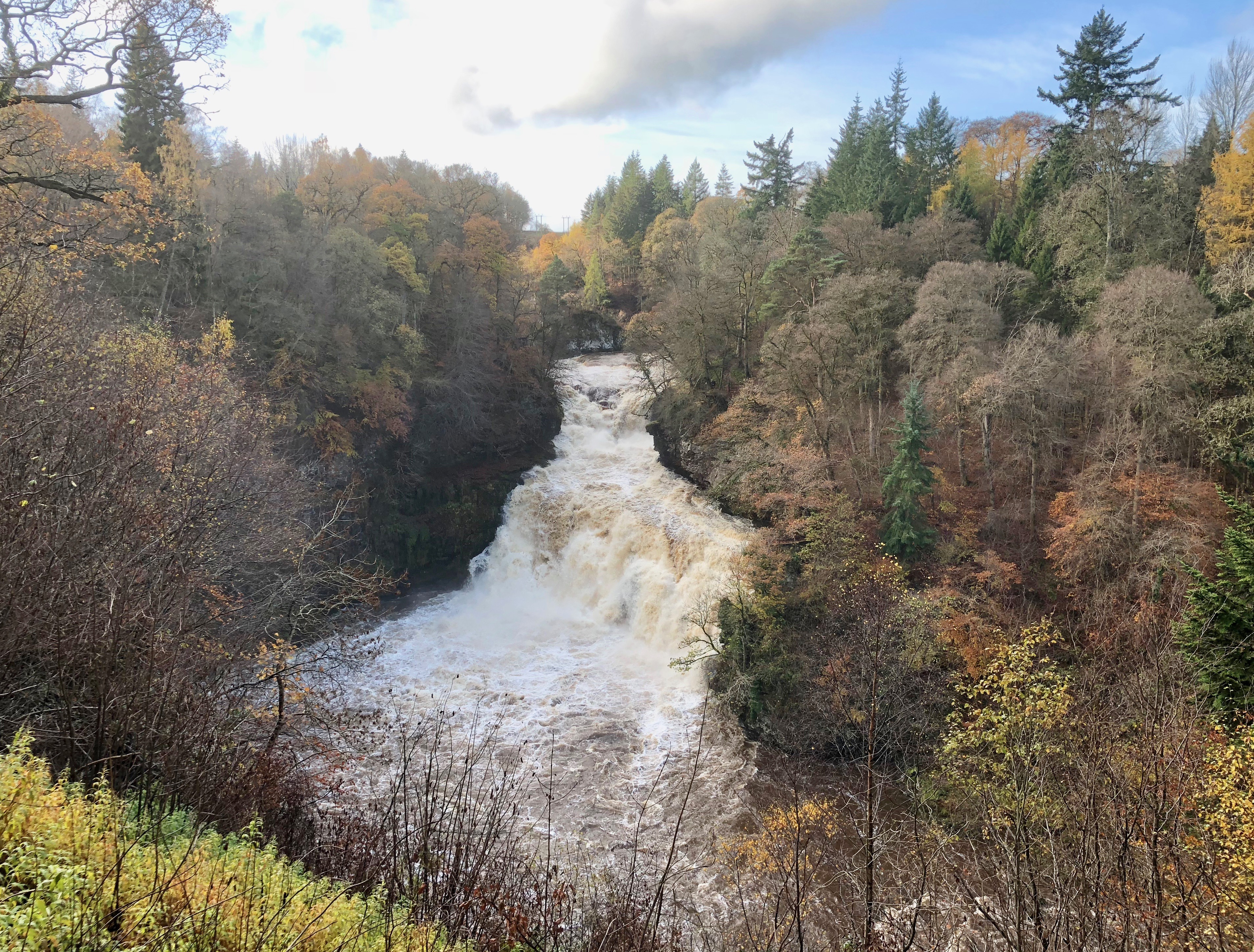
Corra Linn – Scotland’s Majestic Falls of Clyde 🌊
If you’ve ever dreamed of standing beneath a roaring curtain of water that echoes the legends of Scottish poets, Corra Linn in Lanark is the place to make that dream a reality.
1. Introduction
Nestled on the banks of the River Clyde, Corra Linn (pronounced “Cor‑ra Lynn”) is one of the most photographed waterfalls in Scotland. With a vertical drop of 26 metres, the cascade plunges into a deep, emerald pool that reflects the surrounding hills and ancient stone bridges. Whether you’re a seasoned hiker, a photography enthusiast, or simply a traveler looking for a dramatic natural backdrop, Corra Linn offers a slice of Scottish wild beauty that feels both timeless and instantly Instagram‑ready.
2. About Corra Linn
A Brief Description
Corra Linn is part of the famed Falls of Clyde, a series of three waterfalls that have inspired poets, painters, and tourists for centuries. The waterfall sits at the coordinates 55.653453, ‑3.776059 in the historic town of Lanark, South Lanarkshire. The water rushes over a hard sandstone lip, creating a thunderous roar that can be heard from the nearby footpaths.
Historical Significance
The name “Corra” is derived from the Gaelic còrradh, meaning “the weir” – a nod to the ancient water management structures that once harnessed the Clyde’s power for local mills. In the 18th and 19th centuries, the falls attracted the attention of Romantic poets such as Robert Burns, who referenced the “linn” in his verses, and William Wordsworth, who praised the “sublime cascade” during his travels in Scotland.
During the Industrial Revolution, the surrounding area saw the construction of several weirs and dams to power textile mills, leaving a subtle industrial heritage that blends with the natural scenery. Today, the site is protected as a Site of Special Scientific Interest (SSSI), preserving its unique flora, fauna, and geological features.
Why It Matters
Corra Linn isn’t just a pretty picture; it’s a living classroom for geology, ecology, and Scottish cultural history. The waterfall’s plunge pool hosts a variety of aquatic life, while the surrounding woodland provides habitat for red squirrels, pine martens, and a chorus of birdsong. For travelers seeking authentic Scottish landscapes, Corra Linn delivers both visual spectacle and a deeper connection to the land’s past.
3. How to Get There
By Car
- From Glasgow: Take the M74 southbound, exit at Junction 5 (Hamilton), then follow the A71 toward Lanark. Turn right onto A72 and follow the signs for Corra Linn. There is a modest car park just off the main road, with a short, well‑marked walk to the viewing platform.
- From Edinburgh: Head west on the M8, switch to the M74 at M8 Junction 4, then follow the same directions as above. The total drive is roughly 80 km (50 mi) and takes about 1 hour 20 minutes.
By Public Transport
- Train: The nearest station is Lanark Railway Station (ScotRail). Trains run regularly from Glasgow Central (approximately 45 minutes) and Edinburgh Waverley (around 1 hour 30 minutes).
- Bus: From Lanark station, hop on the Stagecoach 12 or 12A bus toward New Lanark; the stop “Corra Linn” is just a two‑minute walk from the falls.
Walking & Cycling
The Clyde Walkway (part of the National Cycle Network Route 75) passes directly by Corra Linn, making it an excellent stop for cyclists and walkers exploring the South Lanarkshire countryside.
4. Best Time to Visit
| Season | What to Expect | Why It’s Ideal |
|---|---|---|
| Spring (Mar‑May) | Fresh, vibrant foliage; higher water flow from snowmelt. | The surrounding woods burst into colour, and the waterfall is at its most powerful. |
| Summer (Jun‑Aug) | Warm weather; longer daylight hours (up to 17 hrs). | Perfect for photography, picnics, and combining a visit with nearby attractions like New Lanark World Heritage Site. |
| Autumn (Sep‑Nov) | Golden leaves; misty atmosphere. | The soft, diffused light creates dramatic photos of the cascade framed by amber trees. |
| Winter (Dec‑Feb) | Fewer crowds; occasional ice formations. | If you don’t mind cooler temperatures, the waterfall can take on a stark, dramatic beauty. |
Tip: The water level peaks after heavy rain, typically in late autumn and early winter, creating a thunderous roar and impressive spray. Check the local weather forecast before you go.
5. What to Expect
The Visitor Experience
- Scenic Walks: A short, paved path leads from the parking area to a viewing platform that offers panoramic vistas of the falls. For the adventurous, a series of stepping stones and narrow trails wind downstream, allowing closer contact with the spray.
- Wildlife Spotting: Keep an eye out for kingfishers darting over the river, and you might hear the distant call of a red deer in the surrounding hills.
- Photography: The best photo angles are from the north bank (sunrise) and the south bank (sunset). A polarising filter helps cut glare on the water, while a wide‑angle lens captures the full breadth of the gorge.
- Facilities: There are basic toilets and a picnic bench near the car park. No café is on site, so bring snacks and water.
Safety
The rocks around the plunge pool can be slippery, especially after rain. Stay on marked paths, and never attempt to climb the sheer rock face. Children should be supervised at all times.
6. Nearby Attractions
While Corra Linn is the star of the show, the surrounding area offers several complementary sites that can easily be added to a day‑trip itinerary:
| Attraction | Distance | What to See | Link |
|---|---|---|---|
| Spring | 0.4 km | A natural spring feeding the Clyde, ideal for a quick stop. | Spring (Lanark) |
| Mill Weir | 0.7 km | Historic weir that once powered local mills; great for a short walk. | Mill Weir (Lanark) |
| Dam | 0.7 km | Small dam offering insight into historic water management. | Dam (Scotland) |
| Bonnington Linn Weir | 0.7 km | Another well‑preserved weir with interpretive signage. | Bonnington Linn Weir |
| Bonnington Linn Waterfall | 0.8 km | A sister cascade to Corra Linn, slightly less visited but equally beautiful. | Bonnington Linn Waterfall |
| New Lanark World Heritage Site | 2 km | Restored 18th‑century mill village, UNESCO‑listed. | New Lanark |
| Falls of Clyde Visitor Centre | 0.5 km | Interactive displays about the geology and history of the falls. | Falls of Clyde Visitor Centre |
All of these spots are within a comfortable walking distance, making Corra Linn an ideal hub for a nature‑and‑heritage walking tour.
7. Travel Tips
- Arrive Early in Summer – The parking lot fills quickly during peak season. Early morning visits also give you softer light for photography.
- Dress for the Mist – Even on a sunny day, the spray from the waterfall can leave you damp. Bring a waterproof jacket or a quick‑dry layer.
- Pack a Picnic – No café on site, but the surrounding grassy knolls are perfect for a scenic lunch.
- Bring Binoculars – Birdwatchers will appreciate a good pair to spot kingfishers and ospreys along the Clyde.
- Check Accessibility – The main viewing platform is wheelchair‑accessible, but the downstream trails are not. Plan accordingly if you have mobility concerns.
- Respect the Environment – Stay on marked paths to protect the delicate riverbank vegetation and avoid disturbing nesting birds.
- Cashless Payments – If you decide to stop at the nearby New Lanark cafés or souvenir shops, most accept contactless cards; however, carrying a small amount of cash can be handy for smaller vendors.
Final Thought
Corra Linn may be just one of the Falls of Clyde, but its dramatic plunge, rich history, and easy accessibility make it a must‑see destination for anyone traveling through Lanark or exploring the Scottish Lowlands. Pair it with a stroll through the historic mill village of New Lanark, and you’ve got a full day of culture, nature, and unforgettable scenery—all within a short drive from Glasgow or Edinburgh.
So lace up your walking boots, charge your camera, and let the roar of Corra Linn guide you into the heart of Scotland’s wild beauty. 🌿✨