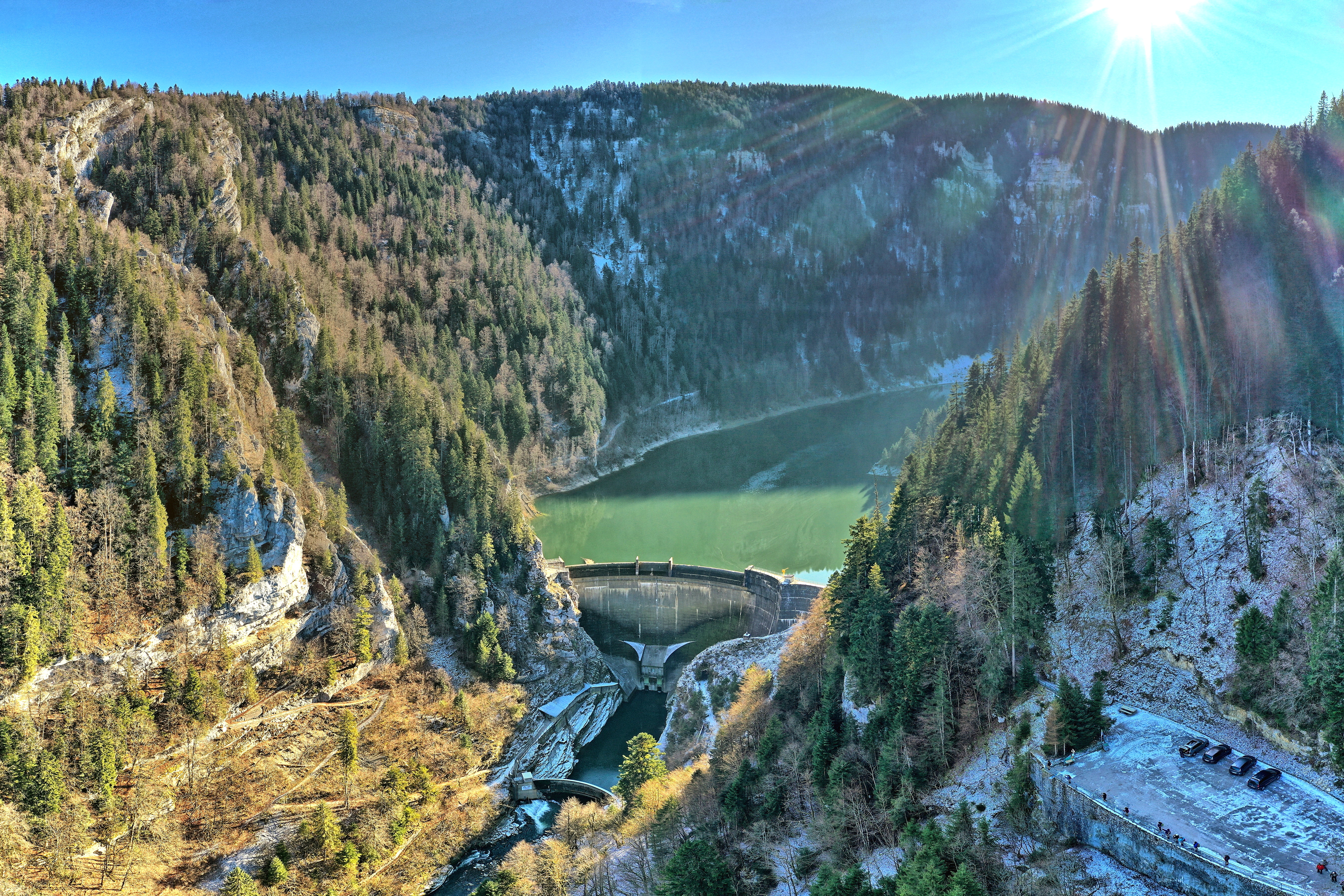
Barrage du Châtelot – A Hidden Gem in the Swiss Jura
If you think Switzerland is only about chocolate, cheese, and towering Alpine peaks, think again. Nestled in the rolling hills of the Jura Mountains, the Barrage du Châtelot offers a quiet, awe‑inspiring glimpse into the country’s engineering heritage and natural beauty.
Introduction
Travelers who wander off the beaten path in the canton of Neuchâtel often stumble upon a striking concrete structure that seems to belong to a different era. The Barrage du Châtelot—a hydro‑electric dam perched above the town of Le Locle—combines the raw power of water with the serene charm of the Jura landscape. Whether you’re a photography enthusiast, a history buff, or simply looking for a peaceful spot to watch the sunrise over a shimmering reservoir, this dam makes for an unforgettable day‑trip destination.
About Barrage du Châtelot
A Brief History
Built in the mid‑20th century as part of Switzerland’s ambitious push to harness renewable energy, the Barrage du Châtelot (French for “Châtelot Dam”) is owned and operated by Société des Forces Motrices de la Grande‑Rivière (SFG). While the exact year of completion is not widely publicised, the dam has been a vital component of the region’s hydro‑electric network for decades, feeding clean electricity into the national grid.
Technical Highlights
- Type: Concrete gravity dam (🏗️)
- Location: Le Locle, Neuchâtel, Switzerland (coordinates 47.101175 N, 6.744528 E)
- Primary Purpose: Hydroelectric power generation
The dam’s impressive volume of stored water is regulated through a series of spillways and a downstream weir, ensuring a steady flow for both energy production and ecological balance. Although the exact height and altitude of the structure remain undisclosed in public records, its sheer mass dominates the surrounding valley, creating a striking contrast against the verdant Jura forests.
Why It Matters
Switzerland generates over 60 % of its electricity from hydro‑power, and the Barrage du Châtelot plays a crucial role in that statistic. Beyond its functional importance, the dam serves as a reminder of the country’s long‑standing commitment to sustainable energy and innovative engineering. For visitors, it offers a rare chance to witness a working piece of infrastructure set against a postcard‑perfect backdrop.
How to Get There
By Train
The Swiss rail network makes the journey to Le Locle a breeze:
- From Zurich: Take an InterCity (IC) train to Neuchâtel (≈1 h 15 min).
- From Geneva: Board a direct InterCity to Neuchâtel (≈1 h 30 min).
- From Neuchâtel: Transfer to a regional S-Bahn (S5) that stops at Le Locle‑Les Roches (≈15 min).
All tickets can be purchased via the SBB mobile app or at any major station.
By Car
If you prefer the flexibility of a road trip, rent a compact car in Neuchâtel or Lausanne and follow the A5 motorway toward Le Locle. The dam sits just a few kilometres north of the town centre; signage for “Barrage du Châtelot” appears shortly after you pass the Route de la Vallée. Parking is available in a small lot near the dam’s visitor area (free of charge).
By Bus
Local bus line 31 runs from Le Locle to the dam’s vicinity every hour. Check the Transports publics du Littoral (TPL) timetable for exact departure times, especially on weekends and public holidays.
Best Time to Visit
| Season | Highlights | Weather & Tips |
|---|---|---|
| Spring (April‑June) | Fresh green foliage, blooming wildflowers, higher water levels after snowmelt. | Mild temps (10‑18 °C). Bring a light jacket and waterproof shoes. |
| Summer (July‑August) | Long daylight hours—perfect for sunrise or sunset photography over the reservoir. | Warm (20‑25 °C). Pack sunscreen and a hat; occasional thunderstorms can appear. |
| Autumn (September‑October) | Golden‑amber trees, crisp air, fewer tourists. | Cool (8‑15 °C). Ideal for hiking the nearby trails. |
| Winter (November‑March) | Snow‑capped Jura peaks, quiet atmosphere, potential for ice‑covered water views. | Cold (‑2 °C to 5 °C). Dress in layers; some access roads may be icy. |
Peak visitor months are July and August, so if you enjoy a lively atmosphere, plan accordingly. For a more tranquil experience, aim for early May or late September.
What to Expect
The Visual Experience
Approaching the Barrage du Châtelot, you’ll first notice the dam’s massive concrete façade, its surface marked by subtle lines that reveal the engineering precision behind it. The reservoir stretches out like a glassy mirror, reflecting the surrounding Jura hills and, on clear days, the distant silhouette of the Alps.
Sound & Atmosphere
Unlike bustling city attractions, the dam offers a gentle soundtrack: the soft rush of water through the spillways, occasional bird calls, and the faint hum of turbines hidden downstream. The atmosphere is contemplative—perfect for a leisurely walk or a moment of meditation.
Visitor Facilities
- Viewing Platform: A short, well‑maintained trail leads to a designated lookout with safety railings and informational panels in French and English.
- Picnic Area: Benches and a small grassy spot near the reservoir invite you to enjoy a packed lunch while taking in the view.
- Restrooms: Basic facilities are available near the parking lot.
Note: The dam is an operational facility, so access to interior rooms or the turbine hall is restricted to organized tours only. Check the official SFG website for any scheduled public tours.
Nearby Attractions
While the Barrage du Châtelot is the star of the show, the surrounding area boasts several natural and cultural points of interest that can easily be combined into a full‑day itinerary.
| Attraction | Distance from Dam | What to See | Link |
|---|---|---|---|
| Le Locle Town Centre | 0.0 km | Historic watch‑making architecture, local cafés, and the Musée d'Horlogerie | Le Locle Official Site |
| Le Locle‑Les Roches Dam | 0.1 km | Another small hydro‑dam offering complementary views of the valley. | — |
| Spring of La Vallée | 0.2 km | A natural spring where clear water bubbles up, perfect for a quick photo stop. | — |
| **Cascade de la ** (Waterfall) | 0.4 km | A modest waterfall that cascades over limestone, especially lively after heavy rain. | — |
| **Weir of the ** (Weir) | 0.4 km | A historic weir that once powered local mills; now a quiet spot for bird‑watching. | — |
All distances are approximate walking distances from the dam’s parking area.
Travel Tips
- Bring a Good Camera – The interplay of water, stone, and mountains creates dramatic lighting, especially during golden hour. A polarising filter helps reduce glare on the reservoir.
- Dress for the Terrain – The viewing platform involves a short gravel walk; sturdy shoes with good grip are advisable.
- Check the Weather – Fog can roll in quickly over the Jura, turning the view into a mystical veil. Clear days give the best panoramic shots.
- Plan a Picnic – Local supermarkets in Le Locle stock fresh cheese, baguettes, and Swiss chocolate—ideal for a lakeside snack.
- Respect the Site – As an active hydro‑electric installation, stay within marked areas and follow any posted safety signs.
- Combine with a Watch‑making Tour – Le Locle is a UNESCO World Heritage site for its horological industry. Pair your dam visit with a guided tour of a local watch factory for a uniquely Swiss experience.
- Public Transport Pass – If you’re traveling extensively by train or bus, consider a Swiss Travel Pass. It covers most regional connections, including the S-Bahn to Le Locle.
Final Thought
The Barrage du Châtelot may not appear on the typical Swiss travel brochure, but that’s precisely why it feels like a secret treasure. It offers a harmonious blend of engineering marvel, natural splendor, and tranquil ambience—an ideal stop for travelers seeking authentic, off‑the‑grid experiences in Switzerland. Pack your camera, hop on the train to Le Locle, and let the Jura’s gentle waters welcome you.
Happy travels!