St. Georg‑Brunnen – Eisenach’s Hidden Fountain Gem
If you think the charm of Thuringia lives only in its castles and forests, think again. Nestled in the heart of Eisenach, the St. Georg‑Brunnen (St. George’s Fountain) offers a quiet splash of history, architecture, and local life. Whether you’re a seasoned traveler, a photography enthusiast, or simply wandering the streets of this historic town, the fountain is a must‑see stop on your Thuringian itinerary.
1. Introduction
Imagine strolling through the cobbled lanes of Eisenach, the birthplace of Johann Sebastian Bach and the gateway to the Wartburg Castle. You turn a corner, and there it is – a modest yet elegant stone fountain, its water gently bubbling over centuries‑old carvings. This is St. Georg‑Brunnen, a beloved landmark that blends the town’s medieval roots with everyday German life.
The fountain may not tower over the skyline, but its presence is unmistakable. It serves as a meeting point for locals, a backdrop for Instagram shots, and a living piece of Eisenach’s cultural tapestry. In this guide, we’ll explore everything you need to know to experience St. Georg‑Brunnen like a local— from its subtle history to the best times to visit, plus handy travel tips and nearby attractions that round out a perfect day in Thuringia.
2. About St. Georg‑Brunnen
A Brief Description
- Name: St. Georg‑Brunnen
- Type: Fountain ⛲
- Location: Eisenach, Thuringia, Germany
- Coordinates: 50.974713 N, 10.320046 E
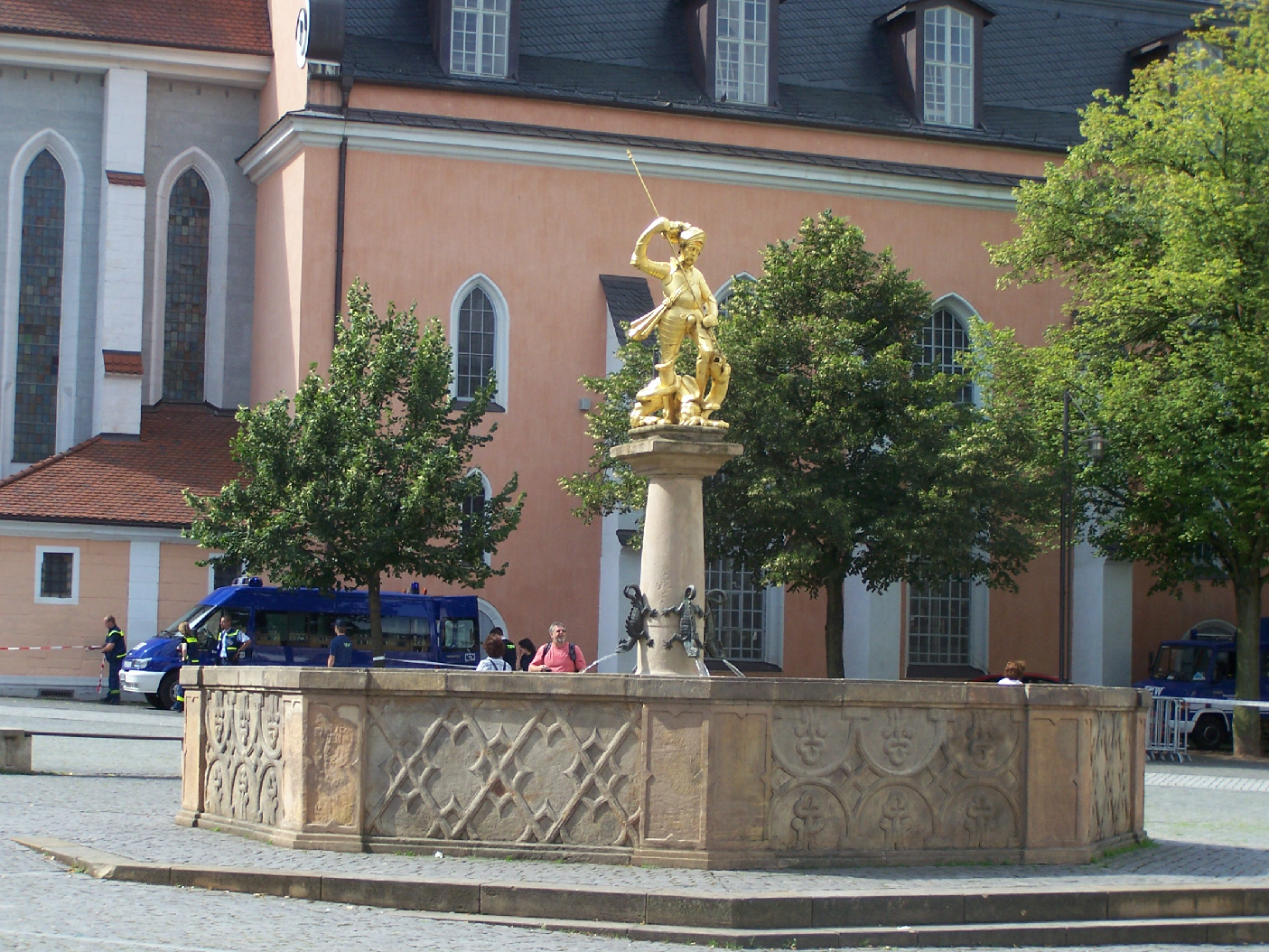
The fountain sits at a central intersection in Eisenach’s historic quarter, surrounded by traditional half‑timbered houses and narrow alleys that whisper stories of the past. Its stone basin is adorned with modest decorative elements that hint at a bygone era of craftsmanship. While the exact height and altitude of the fountain remain undocumented, its modest scale perfectly complements the intimate streetscape.
Historical Context
St. Georg‑Brunnen is named after Saint George, the patron saint of many German towns and a symbol of bravery and protection. Although detailed records of its construction are scarce, the fountain has long served the community as a source of fresh water and a gathering spot. Over the years, it has witnessed Eisenach’s evolution—from a medieval market town to a modern cultural hub—while retaining its original charm.
The fountain’s enduring presence underscores the importance of public water sources in German towns before the advent of indoor plumbing. Today, it stands as a cultural heritage site that reflects Eisenach’s commitment to preserving its historical landmarks. For a concise overview, you can check the German Wikipedia entry: Georgsbrunnen (Eisenach).
3. How to Get There
By Train
Eisenach is well‑connected by regional and long‑distance trains. The Eisenach Hauptbahnhof (main station) receives services from major cities such as Frankfurt, Berlin, and Erfurt. From the station, the fountain is a pleasant 15‑minute walk: head south on Bahnhofstraße, cross the Wartburgstraße bridge, and follow the signs toward the historic town centre.
By Car
If you’re driving, the A4 motorway (Cologne–Görlitz) has an exit for Eisenach (Exit 22). From the exit, follow the signs to the city centre (Stadtmitte). Parking can be found in several public garages near the market square, such as Parkhaus Am Marktplatz. The fountain is just a short stroll from any central parking spot.
By Bike or On Foot
Eisenach’s compact layout makes it ideal for biking or walking. The Thüringer Radweg (Thuringian bike trail) passes close to the historic quarter, offering a scenic route to St. Georg‑Brunnen.
Public Transport
Local buses (e.g., line 1 or 2) stop at “Marktplatz,” which is only a minute’s walk to the fountain. Check the Eisenach Verkehrsbetriebe website for up‑to‑date timetables.
4. Best Time to Visit
| Season | Why Visit? | Tips |
|---|---|---|
| Spring (April–June) | Blossoming trees and mild temperatures create a photogenic backdrop. | Bring a light jacket; the fountain’s stone may feel cool. |
| Summer (July–August) | Longer daylight hours let you linger at nearby cafés after admiring the fountain. | Arrive early to avoid occasional tourist crowds. |
| Autumn (September–October) | Golden foliage adds a warm glow to the stonework. | Perfect for sunset shots; the water reflects the amber light. |
| Winter (November–March) | A quiet, almost magical scene when the fountain is lightly frosted. | Dress warmly; the water may be partially frozen, offering a unique view. |
Overall, late spring and early autumn provide the most comfortable weather and the most striking natural lighting for photography.
5. What to Expect
The Atmosphere
St. Georg‑Brunnen is a living part of Eisenach’s daily rhythm. In the mornings, you’ll see locals filling reusable bottles, children playing nearby, and a street musician strumming a folk tune. By midday, cafés spill onto the sidewalks, and the fountain becomes a natural meeting point for friends and tourists alike.
Visual Details
- Stone Basin: Weathered yet well‑maintained, the basin showcases subtle carvings that hint at a historic design style.
- Water Flow: The gentle cascade creates a soothing soundscape, perfect for a moment of pause amid city exploration.
- Surrounding Architecture: Half‑timbered houses and narrow cobblestone lanes frame the fountain, offering an authentic Thuringian backdrop.
Photo Opportunities
- Close‑up: Capture the water droplets against the stone for a dramatic macro shot.
- Wide‑angle: Include the surrounding historic buildings to convey the fountain’s context within Eisenach.
- Nighttime: When the fountain is illuminated, the reflections on the water add a romantic ambience—ideal for evening Instagram posts.
6. Nearby Attractions
Eisenach is a treasure trove of sights within walking distance of St. Georg‑Brunnen. Here are the top spots you can easily combine into a single day itinerary:
| Attraction | Type | Distance from St. Georg‑Brunnen | Quick Link |
|---|---|---|---|
| [Fountain] (Unnamed nearby fountain) | Fountain | 0.3 km | — |
| Eselsbrünnlein | Fountain | 0.4 km | — |
| Alter Brunnen | Fountain | 0.9 km | — |
| Elisabethbrunnen | Spring | 1.1 km | — |
| Palmentalwehr | Weir | 1.2 km | — |
| Wartburg Castle | UNESCO World Heritage | 2 km | Wartburg Castle |
| Bachhaus Eisenach | Museum (Johann Sebastian Bach) | 1.5 km | Bachhaus Eisenach |
| Marktplatz Eisenach | Historic market square, shops & cafés | 0.2 km | — |
All distances are approximate walking routes.
Tip: After admiring St. Georg‑Brunnen, take a short stroll to the Marktplatz for a coffee, then head toward the Wartburg Castle for a deeper dive into Eisenach’s medieval heritage.
7. Travel Tips
- Bring a Reusable Water Bottle – The fountain’s water is safe to drink, and refilling reduces plastic waste.
- Check Local Events – Eisenach often hosts street festivals and markets near the historic centre; the fountain area can become a lively stage.
- Footwear Matters – Cobblestone streets can be slippery when wet. Wear sturdy, comfortable shoes for walking.
- Respect the Site – While the fountain is public, avoid climbing on the stonework to preserve its condition.
- Photography Etiquette – If you’re using a tripod, be mindful of other visitors and keep the equipment low‑profile.
- Seasonal Gear – In winter, a warm hat and gloves are essential; the fountain’s water may spray a fine mist even in colder weather.
- Combine with a Walking Tour – Many local guides offer free “city walk” tours that start at the Marktplatz and include St. Georg‑Brunnen as a point of interest.
Final Thoughts
St. Georg‑Brunnen may be a modest fountain, but it encapsulates the heart of Eisenach— a blend of history, community, and natural beauty. Its central location makes it an ideal anchor for a day of exploring Thuringia’s cultural gems, from medieval castles to vibrant market squares. So lace up your walking shoes, grab a camera, and let the gentle flow of St. Georg‑Brunnen guide you through one of Germany’s most enchanting towns.
Happy travels, and may the water of St. Georg‑Brunnen refresh both your body and your wanderlust!