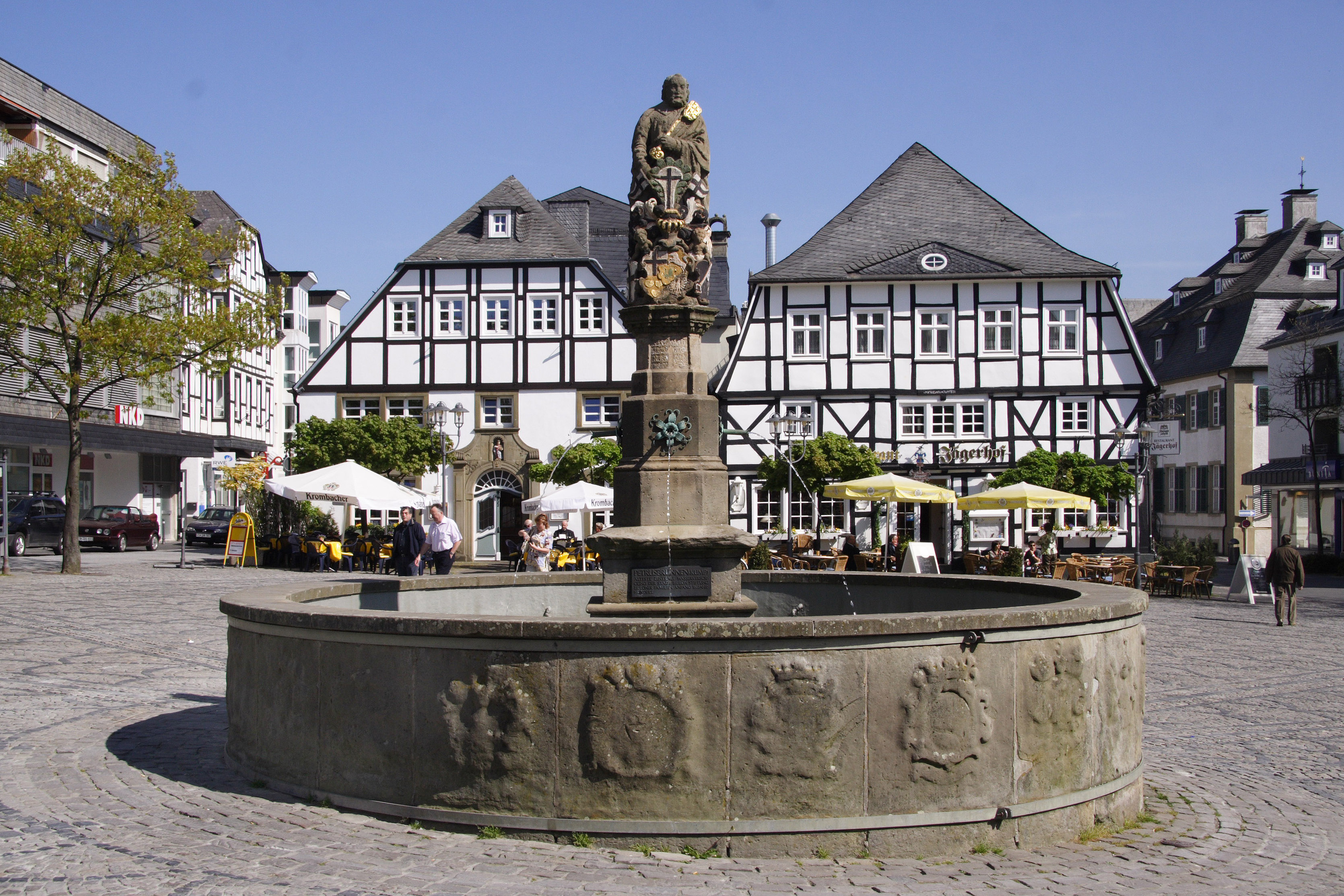
Petrusbrunnen – Brilon’s Hidden Fountain Gem
If you think the Black Forest is the only place in Germany with fairy‑tale water features, think again. Nestled in the historic town of Brilon, North Rhine‑Westphalia, the Petrusbrunnen is a modest yet captivating fountain that invites travelers to pause, sip some local lore, and soak up the charm of a small German city.
1. Introduction
Travelers often chase the big‑ticket attractions—cathedrals, castles, and bustling markets—but the most memorable moments can happen at a quiet corner of a town square. The Petrusbrunnen (St. Peter’s Fountain) is exactly that: a modest stone fountain that has quietly witnessed centuries of Brilon’s daily life. Its gentle spray, historic stonework, and central location make it an ideal photo‑stop, a meeting point, and a portal into the town’s past. Whether you’re a history buff, a fountain enthusiast, or simply looking for a picturesque spot to rest during a day of exploring North Rhine‑Westphalia, Petrusbrunnen should be on your itinerary.
2. About Petrusbrunnen
Description
Located at the heart of Brilon’s old town, the Petrusbrunnen sits at coordinates 51.395665 N, 8.567775 E. The fountain is built from local stone, featuring a simple basin that collects water from a single, elegant spout. While the exact height and altitude of the fountain are not documented, its modest scale blends seamlessly with the surrounding medieval façades, allowing the stonework to speak for itself rather than dominate the scene.
History
The fountain’s name, “Petrus,” refers to St. Peter, the patron saint of many German towns. Although precise construction dates are scarce, the Petrusbrunnen has been a part of Brilon’s public space since at least the early 19th century, when municipal water sources were first centralized in the town center. Over the decades, the fountain has survived wars, urban redevelopment, and the shift from coal‑driven industry to modern tourism, making it a living testament to Brilon’s resilience.
Significance
In small German towns, public fountains historically served three purposes:
- Practical – providing clean drinking water before modern plumbing.
- Social – acting as a gathering place for merchants, townsfolk, and travelers.
- Symbolic – representing civic pride and often commemorating saints or local benefactors.
Petrusbrunnen embodies all three. Locals still refill reusable bottles from its cool spring water, tourists use it as a meeting point, and the stone’s weathered surface tells a story of community continuity. For a town that once thrived on the Briloner Kohlen (coal) industry, the fountain is a gentle reminder that the lifeblood of a community is not only its mines but also its shared water.
3. How to Get There
By Train
Brilon is served by the Sauerland‑Bergland Railway (RB 92). The Brilon Stadt station is a short 10‑minute walk from the fountain. From major hubs such as Dortmund or Kassel, you can catch direct regional trains that arrive roughly every hour.
By Car
If you prefer driving, take the A44 (Emsland‑Bielefeld) toward Brilon and exit at Brilon West. From the highway, follow signs for the town centre (Altstadt). Parking is available at the Stadtpark lot (≈300 m from the fountain) or the Bahnhof underground garage.
By Bus
Local bus lines SB 31 and SB 32 stop at “Brilon, Hauptmarkt,” which is the square directly in front of Petrusbrunnen. The bus network connects nearby towns such as Winterberg, Meschede, and Höxter.
Walking & Cycling
Brilon’s compact old town is pedestrian‑friendly. The fountain lies within a 5‑minute stroll from the Brilon Market and the St. Johannes Church. Cyclists can use the town’s bike‑share program; docking stations are positioned near the Stadtpark and Bahnhof.
4. Best Time to Visit
| Season | Why Visit | Weather Tips |
|---|---|---|
| Spring (April‑May) | Blossoming chestnut trees line the streets, and the fountain’s water glistens against fresh sunshine. | Light jacket; occasional rain showers. |
| Summer (June‑August) | Long daylight hours let you linger at the fountain while exploring nearby cafés. | Pack sunscreen; bring a reusable water bottle (the fountain is drinkable!). |
| Autumn (September‑October) | Golden foliage creates a postcard‑perfect backdrop; fewer tourists mean a quieter experience. | Layered clothing; evenings can be crisp. |
| Winter (November‑March) | The stone takes on a serene, frosted look; the surrounding market often hosts holiday stalls. | Warm coat, gloves; the fountain may be partially covered for safety. |
Overall, late spring to early autumn offers the most comfortable weather for strolling around Brilon’s historic centre, but the fountain’s charm endures year‑round.
5. What to Expect
Arriving at Petrusbrunnen, you’ll first notice the gentle murmur of water against stone—a sound that instantly calms the bustle of the market square. The fountain’s basin is wide enough for children to splash in, yet low enough that adults can comfortably lean over to fill a bottle.
Surrounding the fountain are cobblestone streets, half‑timbered houses, and the occasional café terrace where you can sip a Kaffee while watching locals pass by. Look up and you’ll see a modest plaque (in German) that briefly explains the fountain’s dedication to St. Peter.
Because the fountain is centrally located, you’ll often find street musicians, artisans, and seasonal market stalls nearby. This creates a lively atmosphere that feels both historic and contemporary—a perfect spot for candid photography or a quiet moment of reflection.
6. Nearby Attractions
While Petrusbrunnen is the star of the show, Brilon’s old town offers several other water‑related gems within walking distance:
| Attraction | Distance | Highlights |
|---|---|---|
| Geschichtsbrunnen | 0.1 km | A “History Fountain” featuring sculpted panels that depict key events from Brilon’s medieval past. |
| Schnadebrunnen | 0.3 km | Known for its decorative ironwork and a small plaque explaining the old “Schnade” (a local term for a water channel). |
| St. Johannes Church | 0.2 km | A Romanesque‑Gothic church with stunning stained‑glass windows. |
| Brilon Museum | 0.4 km | Exhibits on regional mining, textile production, and the town’s evolution. |
| Stadtpark | 0.5 km | A green oasis with walking trails, a playground, and a café overlooking a pond. |
All attractions are reachable within a 5‑minute walk, making it easy to design a “fountain tour” of Brilon.
7. Travel Tips
- Bring a Reusable Bottle – The water from Petrusbrunnen is clean and safe to drink, perfect for eco‑friendly travelers.
- Check Local Event Calendars – Brilon hosts a Christmas market (late November to December) and a summer street‑festival in July; the fountain area becomes a lively stage during these events.
- Mind the Foot Traffic – During peak market hours (Saturday mornings), the square can become crowded. Visit early or late in the afternoon for a more relaxed experience.
- Photography Etiquette – The fountain is a public space, but be courteous to locals and avoid using flash when people are nearby.
- Currency & Payments – While most cafés accept credit cards, small stalls may prefer cash (Euro). Carry a few notes for small purchases.
- Language – German is the primary language, but most shop owners speak basic English. Learning a simple greeting like “Guten Tag” goes a long way.
- Accessibility – The cobblestones can be uneven for wheelchair users. However, the surrounding streets have recently been upgraded with smoother surfaces near the fountain.
Final Thought
The Petrusbrunnen may not boast the height of Munich’s Neues Rathaus or the grandeur of Berlin’s Brandenburg Gate, but its quiet elegance captures the soul of Brilon—a town where history flows as gently as the water from its fountains. Add this modest yet meaningful stop to your North Rhine‑Westphalia travel plan, and you’ll discover that sometimes the most memorable journeys begin with a single sip from a stone basin.
Happy travels, and may your path be as refreshing as the waters of Petrusbrunnen!