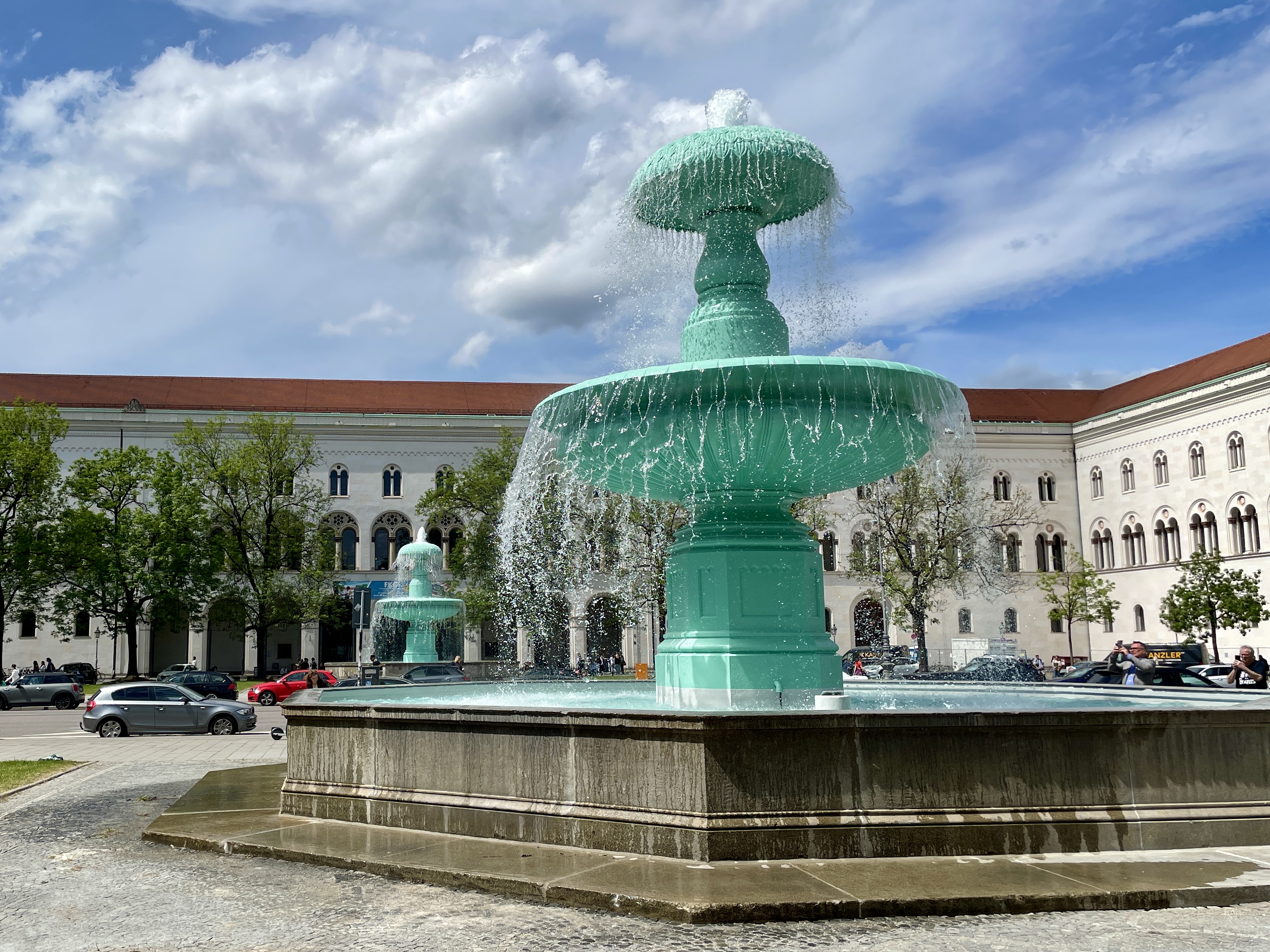
Römischer Brunnen – Munich’s Hidden Roman‑Style Fountain
If you wander the historic streets of Munich and stumble upon a quiet courtyard where water gently cascades from a classical basin, you’ve found the Römischer Brunnen. This modest yet charming fountain is a perfect example of how the city blends ancient motifs with Bavarian elegance. In this guide we’ll explore what makes the Römischer Brunnen worth a stop, how to get there, the best time to visit, and the other attractions that sit just a stone’s throw away.
1. Introduction
Munich is famous for its grand Marienplatz, towering Frauenkirche, and bustling beer gardens, but the city also hides a handful of intimate gems that often escape the typical tourist radar. The Römischer Brunnen (literally “Roman Fountain”) is one of those hidden treasures—a small, sculpted water feature tucked into a historic courtyard that feels like a portal to an ancient Roman villa. Whether you’re a history buff, a photography enthusiast, or simply looking for a peaceful spot to pause on a city walk, the Römischer Brunnen offers a quiet moment of reflection amid Munich’s lively streets.
2. About Römischer Brunnen
Description
The Römischer Brunnen is a fountain (⛲) situated in the heart of Munich, Bavaria, Germany. Its design follows a classic Roman “schale” (bowl) motif, with water flowing into a shallow, circular basin that is framed by simple stone balustrades. The fountain’s clean lines and subtle ornamentation give it a timeless quality that blends seamlessly with the surrounding historic architecture.
History & Significance
Known locally as the Schalenbrunnen, the Römischer Brunnen dates back to the late‑19th century when Munich’s city planners were eager to embed classical elements into the urban landscape. While the exact year of construction is not widely publicised, the fountain has long served as a decorative focal point in the courtyard where it resides, offering both aesthetic appeal and a practical source of water in the days before modern plumbing. Today, it stands as a reminder of Munich’s respect for classical art and its commitment to preserving small‑scale heritage sites.
The fountain’s coordinates (48.150531, 11.581668) place it within walking distance of several major attractions, making it an ideal micro‑stop on a cultural walking tour of the city. Although its height and altitude are not documented, its modest scale encourages close‑up viewing and photography.
3. How to Get There
By Public Transport
Munich’s public‑transport network (MVV) makes the Römischer Brunnen easily reachable:
| Transport Mode | Nearest Stop | Approx. Walking Time |
|---|---|---|
| U‑Bahn (subway) | Karlsplatz (Stachus) (U4/U5) | 5‑7 minutes |
| U‑Bahn | Marienplatz (U3/U6) | 10‑12 minutes |
| Tram | Karlsplatz (Tram 16, 18, 19) | 5‑7 minutes |
| S‑Bahn | Munich Central Station (Hauptbahnhof) | 12‑15 minutes (walk or short tram ride) |
From any of these stops, follow the signs toward the Residenz and Hofgarten area; the fountain is located in a quiet courtyard just off the main thoroughfare.
By Foot or Bicycle
If you’re staying in the city centre, a leisurely 15‑minute walk from Marienplatz will bring you to the fountain’s courtyard. Munich’s bike‑share system (MVG Rad) also offers a convenient way to reach the site; docking stations are plentiful near the U‑Bahn stops mentioned above.
Driving & Parking
Driving in central Munich can be challenging due to limited parking and a low‑emission zone (LEZ). If you must drive, use the Parkhaus am Stachus (underground garage) and walk the short distance to the fountain. Remember to check your vehicle’s emission sticker before entering the LEZ.
4. Best Time to Visit
Seasonal Recommendations
| Season | Why Visit? |
|---|---|
| Spring (April‑May) | The surrounding gardens begin to bloom, adding a splash of colour to the fountain’s stone setting. |
| Summer (June‑August) | Long daylight hours allow for relaxed strolling; early mornings are ideal to avoid crowds. |
| Autumn (September‑October) | Soft golden light enhances the fountain’s classical lines; the nearby Hofgarten’s foliage creates a picturesque backdrop. |
| Winter (November‑February) | Though the courtyard may be quieter, the fountain takes on a serene, almost meditative atmosphere—especially after a light snowfall. |
Tip: The fountain is illuminated in the evenings during the summer months, offering a magical photo opportunity as the water catches the warm glow of nearby street lamps.
5. What to Expect
When you arrive at the Römischer Brunnen, you’ll find a quiet courtyard that feels removed from the bustling streets just beyond its walls. The gentle sound of water creates a soothing ambiance, making it a perfect spot for:
- Photography: The symmetrical basin and classical stonework frame the water beautifully. Early morning light or the golden hour in the evening yields the best contrast.
- Relaxation: Grab a coffee from a nearby café (several sit along the adjacent streets) and enjoy a moment of contemplation.
- Cultural Context: Look around and you’ll notice other historic elements—old façades, decorative ironwork, and nearby statues—that together tell the story of Munich’s architectural evolution.
Because the fountain is relatively small, it rarely attracts large crowds, allowing you to linger as long as you wish without feeling rushed.
6. Nearby Attractions
The Römischer Brunnen sits in a cluster of charming fountains and historic sites, making it easy to create a mini‑tour of Munich’s lesser‑known water features:
| Attraction | Distance | Why Visit? |
|---|---|---|
| Römischer Brunnen (itself) | 0 km | Classic Roman‑style basin, perfect for a quick stop. |
| Eulenbrunnen | 0.1 km | A whimsical owl‑themed fountain that adds a playful contrast. |
| Friedr. v. Gärtner Fountain | 0.2 km | Dedicated to the famous architect Friedrich von Gärtner, showcasing neoclassical design. |
| Schalenbrunnen (Munich) | 0.1 km | The official Wikipedia entry for the Römischer Brunnen, offering deeper historical context. |
Note: Two nearby fountains are listed without specific names in the source data; they are located within a 0.2 km radius and can be discovered while wandering the courtyard area.
While you’re in the vicinity, consider extending your walk to the Residenz München, the former royal palace, and the Hofgarten, a beautifully landscaped garden that frames many of these fountains.
7. Travel Tips
| Tip | Details |
|---|---|
| Check Opening Hours | The courtyard is publicly accessible at all times, but surrounding museums may have limited hours. |
| Bring a Compact Umbrella | Munich’s weather can be unpredictable; a small umbrella lets you stay dry while still enjoying the fountain’s view. |
| Wear Comfortable Shoes | Cobblestone streets are common in the historic centre; sturdy walking shoes make the stroll pleasant. |
| Respect the Site | As a historic monument, avoid climbing on the fountain or leaving any litter. |
| Combine with a Food Break | Nearby cafés on Weinstraße and Karlsplatz serve excellent Bavarian pastries—perfect for a quick snack after your visit. |
| Photography Etiquette | If you’re using a tripod, be mindful of other visitors and keep equipment low‑profile to maintain the tranquil atmosphere. |
| Language | While German is the official language, most locals speak English, especially in tourist areas. A simple “Entschuldigung, wo ist der Römischer Brunnen?” will get you friendly directions. |
Final Thoughts
The Römischer Brunnen may not dominate travel guides, but its understated beauty and central location make it a rewarding stop for anyone exploring Munich’s historic heart. Whether you’re mapping a day of major museums or seeking a quiet interlude between bustling squares, this Roman‑style fountain offers a moment of timeless elegance that captures the spirit of Bavaria’s capital.
Next time you find yourself in Munich, let the sound of water guide you to the Römischer Brunnen—your own hidden oasis in the city’s rich tapestry.