Paulibrunnen – Erlangen’s Hidden Neo‑Renaissance Gem
If you think Bavaria is only about castles, beer gardens, and Alpine vistas, you haven’t yet discovered the quiet charm of Erlangen’s historic fountains. Nestled on the bustling Schloss‑ und Marktplatz, the Paulibrunnen is a beautifully sculpted piece of 19th‑century art that invites travelers to pause, admire, and soak up a slice of Bavarian history.
About Paulibrunnen
The Paulibrunnen (sometimes listed as Pauli‑Brunnen) stands proudly in the heart of Erlangen, Bavaria, Germany. Designed in the flamboyant Neo‑Renaissance style between 1886 and 1889, the fountain is a testament to the city’s flourishing cultural scene during the late 19th century.
A quick snapshot
| Detail | Information |
|---|---|
| Location | Schloss‑ und Marktplatz, Erlangen, Bavaria, Germany |
| Coordinates | 49.597719 N, 11.003471 E |
| Design | Friedrich Wanderer |
| Construction | Executed by Heinrich Schwabe, Georg Leitner, and Christoph Lenz |
| Patrons | Salomon and Julie Pauli |
| Reliefs | Portraits of Luitpold of Bavaria, Margrave Christian Ernst, and Margrave Alexander |
The fountain’s most striking feature is its series of relief sculptures that honor important Bavarian figures. The central relief depicts Luitpold, Prince Regent of Bavaria, flanked by Margrave Christian Ernst and Margrave Alexander, linking the fountain to the region’s noble lineage.
The Pauli family, Salomon and his wife Julie, funded the project as a gift to the city, reflecting the era’s tradition of civic philanthropy. Their contribution helped bring Friedrich Wanderer’s elaborate design to life, while master craftsmen Heinrich Schwabe, Georg Leitner, and Christoph Lenz oversaw the stone carving and installation.
Although the exact height of the fountain remains undocumented, its presence dominates the square, drawing locals and visitors alike to its ornate basin and sculptural narrative.
For a deeper dive into the square’s history, check out the Schloss‑ und Marktplatz Wikipedia page (German).
How to Get There
By Train
Erlangen is a well‑connected stop on the Nuremberg–Bamberg railway line. The Erlangen Hauptbahnhof (main station) is just a 10‑minute walk from the Paulibrunnen. Follow the signs toward the city centre, cross the Schlossstraße, and you’ll arrive at the Schloss‑ und Marktplatz in under five minutes.
By Public Bus
The city’s bus network (VGN) offers several routes that stop at Marktplatz or Schloss. Lines R31, R33, and R34 are the most convenient for tourists staying in the western or southern districts.
By Car
If you’re driving, the fountain is located just off B2 (the Nuremberg‑Bamberg highway). Use the “Erlangen – Schloss/Marktplatz” parking garages (Parkhaus Schloss or Parkhaus Marktplatz). Both are a short, well‑signposted walk away.
By Bike or On Foot
Erlangen’s compact city centre makes the Paulibrunnen a perfect walking or cycling destination. The city’s bike‑share program (Erlanger Rad) has stations within a 200‑meter radius of the square.
Best Time to Visit
| Season | Why It Works |
|---|---|
| Spring (April–June) | Blossoming trees line the square, and the fountain’s water glistens in the mild sunlight. |
| Summer (July–August) | Longer daylight hours let you linger at nearby cafés while enjoying the fountain’s cool mist. |
| Autumn (September–October) | Golden leaves provide a picturesque backdrop; fewer tourists mean a more relaxed atmosphere. |
| Winter (November–February) | The fountain is often illuminated for the Erlangen Christmas Market, creating a magical, frosty ambience. |
Tip: The fountain’s water flow is usually reduced during the coldest months to prevent freezing, but the surrounding architecture remains just as photogenic.
What to Expect
Arriving at the Paulibrunnen, you’ll be greeted by the soft murmur of water cascading into a stone basin, framed by ornate Neo‑Renaissance detailing. The reliefs are carved in high relief, allowing sunlight to play across the faces of Luitpold, Christian Ernst, and Alexander, creating subtle shadows that change throughout the day.
The square bustles with street musicians, market stalls, and outdoor cafés—especially during the summer months. Grab a Bayerische Breze or a glass of locally brewed Erlangen lager from a nearby vendor, and settle onto one of the stone benches that line the plaza.
Because the fountain is centrally located, it serves as a natural meeting point for locals. You’ll often see students from the Friedrich‑Alexander‑Universität Erlangen‑Nürnberg gathering here before heading to lectures, adding a youthful energy to the historic setting.
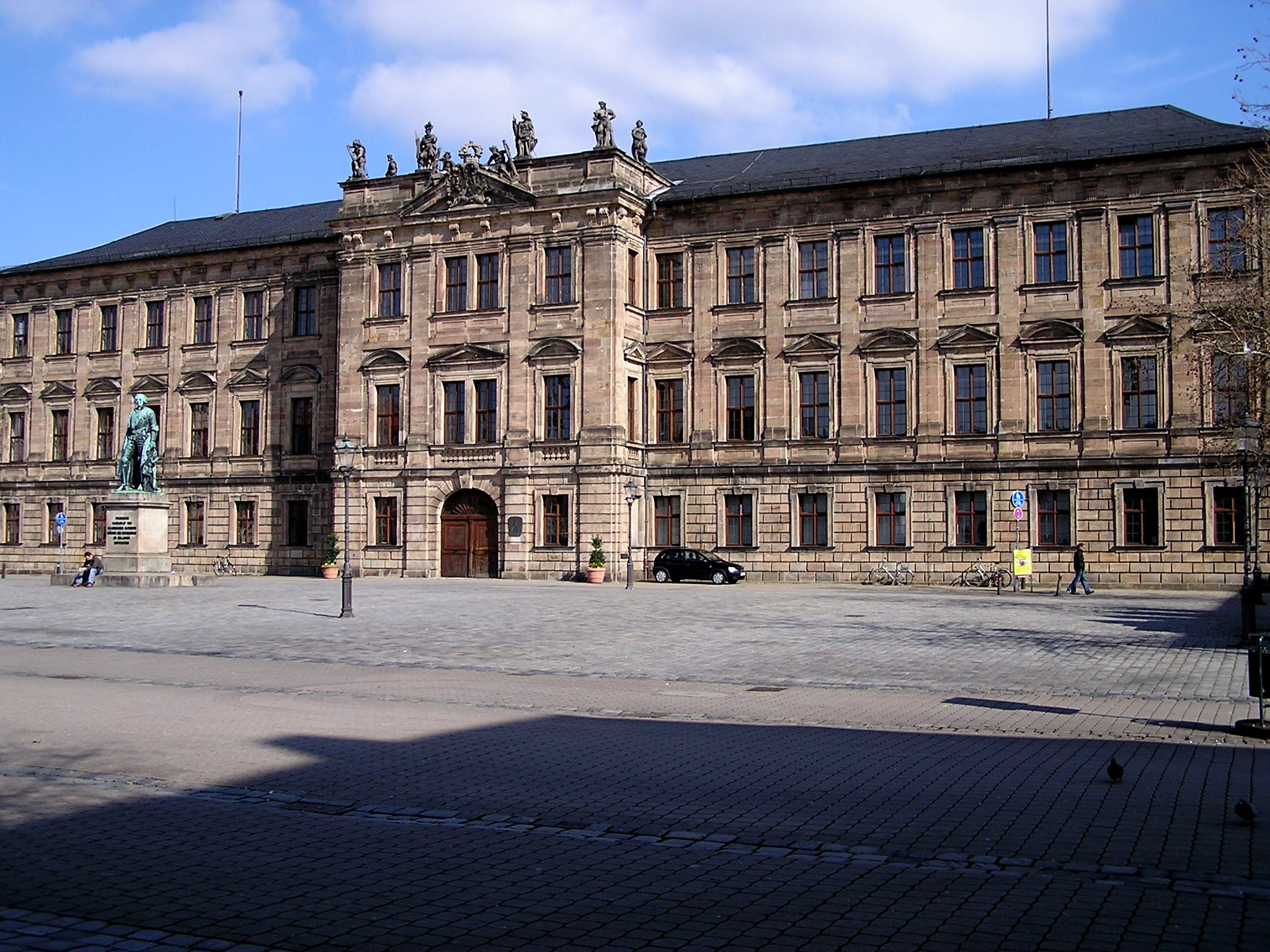
Photographers will appreciate the symmetry of the fountain against the backdrop of the Erlangen Castle (Schloss Erlangen) and the St. Michael’s Church across the square. The combination of water, stone, and historic architecture makes for compelling compositions at any hour.
Nearby Attractions
While you’re exploring the Paulibrunnen, make sure to check out these fascinating fountains and landmarks within a short stroll:
| Attraction | Distance | Link |
|---|---|---|
| Hugenottenbrunnen (fountain) | 0.1 km | Hugenottenbrunnen – Wikipedia |
| Kugelbrunnen (fountain) | 0.2 km | Kugelbrunnen – Wikipedia |
| Rückert‑Brunnen (fountain) | 0.3 km | Rückert‑Brunnen – Wikipedia |
| Erlangen Castle (Schloss Erlangen) | 0.4 km | Schloss Erlangen – Wikipedia |
| St. Michael’s Church | 0.4 km | St. Michael Erlangen – Wikipedia |
All of these sites are comfortably walkable, letting you weave a full‑day itinerary that showcases Erlangen’s blend of baroque, neoclassical, and modernist architecture.
Travel Tips
-
Combine with a city walk – Start at the Erlangen University campus, head south to the Paulibrunnen, then loop around the castle and the Marktplatz. You’ll cover the main attractions in under two hours.
-
Bring a reusable water bottle – The fountain’s basin is not for drinking, but the city’s public water fountains are plentiful and safe.
-
Check event calendars – The square often hosts classical concerts, art fairs, and seasonal markets. Visiting during an event adds extra vibrancy to the Paulibrunnen experience.
-
Mind the lighting – In the evenings, the fountain is illuminated with soft amber lighting, perfect for night‑time photography. Arrive just before sunset to capture the transition.
-
Respect the heritage – While the fountain is a popular photo spot, avoid climbing on the stonework or touching the reliefs to preserve the intricate carvings.
-
Currency & Payments – Most cafés and shops accept contactless credit cards and EC‑Karten. Cash is still handy for small market stalls.
-
Language tip – While German is the primary language, most locals in Erlangen speak English fluently, especially in the tourism sector. A simple “Bitte” (please) or “Danke” (thank you) goes a long way.
Final Thoughts
The Paulibrunnen may not be as famous as Munich’s Marienplatz or the Neuschwanstein Castle, but its quiet elegance offers a genuine glimpse into Bavarian civic pride and 19th‑century artistry. Whether you’re a history buff, a photography enthusiast, or simply a traveler craving an off‑the‑beaten‑path experience, this fountain deserves a spot on your Erlangen itinerary.
Next time you find yourself wandering through Bavaria’s charming towns, let the sound of water guide you to the heart of Erlangen—where the Paulibrunnen awaits, ready to share its stories of royalty, philanthropy, and timeless beauty.
Keywords: Paulibrunnen Erlangen, Bavarian fountains, historic fountain Germany, Neo‑Renaissance fountain, Erlangen travel guide, things to do in Erlangen, Bavaria travel, Schloss‑ und Marktplatz, Erlangen attractions.