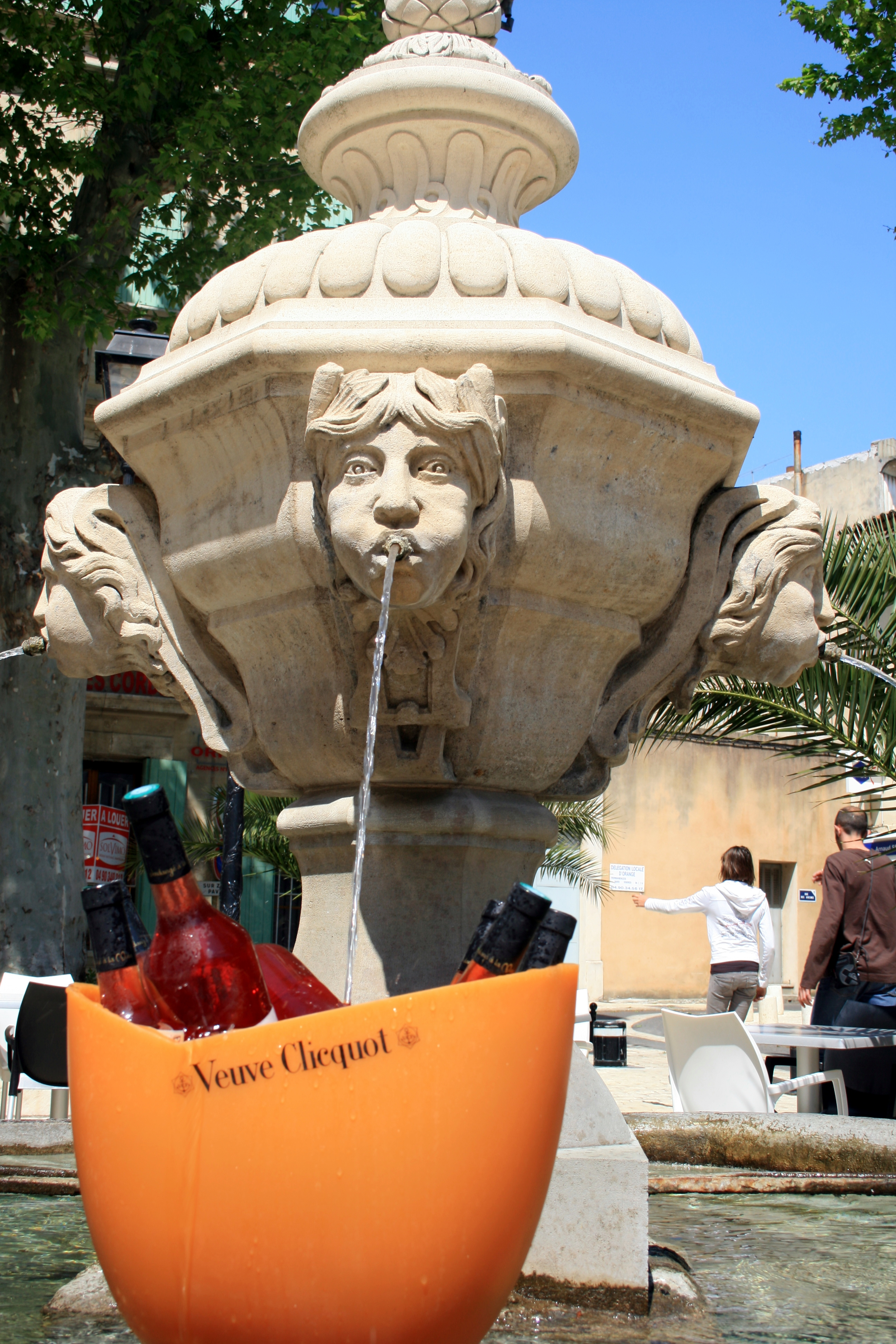
Fontaine publique du 18s – A Hidden Gem in the Heart of Orange, Provence-Alpes‑Côte d’Azur
If you think the Roman theatres and ancient triumphal arches are the only reasons to visit Orange, think again. Nestled among the cobbled streets is the elegant Fontaine publique du 18s, a classic French fountain that captures the timeless charm of Provençal public spaces.
1. Introduction
There’s something magical about stumbling upon a beautifully sculpted fountain while wandering through a historic town. In Orange, a city celebrated for its UNESCO‑listed Roman theatre, the Fontaine publique du 18s offers exactly that moment of surprise and delight. With its four expressive faces spouting water in perfect harmony, the fountain is more than just a decorative piece – it’s a living reminder of the city’s centuries‑old tradition of public art, civic pride, and community gathering places. Whether you’re a history buff, a photography enthusiast, or simply a traveler looking for an authentic slice of Provençal life, this fountain deserves a spot on your itinerary.
2. About Fontaine publique du 18s
Description
- Type: Classical public fountain
- Location: Place de la République, 84000 Orange, Provence‑Alpes‑Côte d’Azur, France
- Coordinates: 44.136511 N, 4.809456 E
- Design: The fountain features four sculpted faces (often described as “quatre visages”) that each pour water into a central basin. The stonework is typical of 19th‑century French municipal fountains, combining neoclassical elegance with a functional water source for townspeople.
While the exact height and altitude of the fountain are not recorded in official sources, its modest scale fits perfectly into the surrounding square, allowing visitors to approach closely, hear the gentle splash, and feel the cool mist on a warm summer day.
History & Significance
The name “Fontaine publique du 18s” hints at a historical reference to the 18th century, a period when many French towns invested in public waterworks as symbols of progress and civic welfare. Although the precise construction date is not listed on the Wikipedia entry, the fountain’s classic style aligns with the wave of municipal improvements that swept through Provence in the late 1700s and early 1800s.
In Orange, a city whose roots stretch back to Roman times, the fountain represents a bridge between ancient public spaces (like the Roman theatre) and modern communal life. It has served generations of locals as a meeting point, a place to pause for a drink of water, and a backdrop for countless photographs. Today, tourists and residents alike gather around the four faces to enjoy a moment of tranquility amid the town’s bustling market days.
3. How to Get There
By Air
- Nearest airports: Marseille Provence Airport (MRS) – about 120 km away, and Lyon–Saint‑Exupéry (LYS) – roughly 250 km away. Both airports offer regular shuttle services or rental cars that can take you to Orange in 1.5–2 hours.
By Train
- TGV & TER services: Orange is well‑connected via the French high‑speed rail network. The Orange train station (Gare d’Orange) lies on the Lyon‑Marseille line, with direct TGV connections from Paris (≈2 h 30 min) and Marseille (≈30 min). From the station, the fountain is a pleasant 15‑minute walk through the historic centre.
By Car
- From Marseille: Take the A7 motorway north toward Lyon, exit at Orange (Exit 22). Follow signs for Place de la République – the fountain sits right in the square.
- Parking: The city offers several free and paid parking zones. The Parking du Théâtre (a short 5‑minute walk) is the most convenient for visitors heading to the fountain and nearby attractions.
By Bus or Bike
- Local bus lines (e.g., lines 1, 2, and 3) stop within a few minutes’ walk of the fountain.
- Bike rentals are available at the city’s “Vél’Orange” stations; the flat terrain of the town makes cycling a breezy way to explore the historic centre.
4. Best Time to Visit
| Season | Weather | Visitor Tips |
|---|---|---|
| Spring (Mar‑May) | Mild temperatures (12‑20 °C), blooming gardens | Ideal for photographing the fountain with colorful blossoms in the background. |
| Summer (Jun‑Aug) | Warm to hot (25‑35 °C) | Early mornings or late evenings are best to avoid the midday heat. The fountain’s cool mist is especially refreshing. |
| Autumn (Sep‑Nov) | Pleasant (15‑22 °C), fewer crowds | Perfect for a relaxed stroll; the golden light adds a romantic glow to the stone faces. |
| Winter (Dec‑Feb) | Cool (5‑10 °C), occasional rain | The fountain takes on a quiet, almost contemplative atmosphere—great for those who love off‑peak travel. |
Peak visiting hours are typically between 10 am and 2 pm during the summer tourist season. If you prefer a quieter experience, aim for early morning or after sunset when the square is softly illuminated.
5. What to Expect
When you arrive at Place de la République, the fountain immediately draws your eye. The four sculpted faces, each with a slightly different expression, seem to converse with one another as water arcs gracefully into the basin. The sound of flowing water creates a gentle soundtrack that drowns out the occasional chatter of café patrons nearby.
- Photographic moments: Capture the symmetry of the four faces from the center of the square, or experiment with low‑angle shots that emphasize the water’s motion. Evening lighting—when the fountain is subtly illuminated—adds a magical ambience.
- Café culture: A handful of cafés line the square, offering outdoor seating where you can sip a café au lait while watching locals and tourists alike pause at the fountain.
- Cultural vibe: Throughout the year, the square hosts small markets, street performances, and seasonal festivals. The fountain often serves as a natural backdrop for these community events, giving you a chance to experience authentic Provençal life.
6. Nearby Attractions
Orange is compact, and the Fontaine publique du 18s is within walking distance of several other points of interest. Below is a quick guide to the surrounding highlights (all within roughly 0.1 km of the fountain):
- Fontaine Place Verdi – A charming 19th‑century fountain named after the famous composer, featuring ornamental basins and decorative ironwork.
- Historic Fountain #1 – Another classic public fountain located just a stone’s throw away, perfect for a quick photo stop.
- Historic Fountain #2 – Similar in style to the du 18s, this fountain adds to the “fountain trail” that winds through the city center.
- Historic Fountain #3 – A smaller water feature that often serves as a gathering spot for local children.
- Historic Fountain #4 – The final stop on the short fountain walk, showcasing intricate stone carvings typical of Provençal municipal art.
Pro tip: Create your own “fountain tour” by starting at the Fontaine publique du 18s, then meandering to the nearby fountains and finishing with a visit to the Roman Theatre of Orange (a UNESCO World Heritage site) just a 5‑minute walk away.
7. Travel Tips
| Tip | Details |
|---|---|
| Carry a reusable water bottle | While the fountain is decorative, many public fountains in France still provide drinkable water. Check local signage. |
| Dress for the weather | Summer can be hot; a hat and sunscreen are essential. In winter, a light jacket will keep you comfortable. |
| Mind the opening hours of nearby cafés | Most cafés open around 8 am and close by 7 pm. Arriving early ensures you can enjoy a coffee with a view of the fountain. |
| Respect local customs | The square is a communal space. Keep noise levels moderate, especially during early mornings or late evenings. |
| Use a map app | Input the coordinates 44.136511, 4.809456 for precise navigation, especially if you’re walking from the train station. |
| Photography etiquette | While photography is encouraged, avoid using flash that could disturb nearby visitors or wildlife (e.g., pigeons). |
| Stay aware of pickpockets | Like many tourist hubs, keep your belongings secure, especially in crowded market days. |
| Plan a fountain‑focused itinerary | Combine the Fontaine publique du 18s with the nearby fountains, the Roman theatre, and the Arc de Triomphe d’Orange for a full day of culture. |
Final Thoughts
The Fontaine publique du 18s may not be as famous as Orange’s Roman theatre, but its quiet elegance and central location make it a perfect waypoint for any traveler exploring the Provence‑Alpes‑Côte d’Azur region. Whether you’re pausing for a photo, sipping a coffee, or simply listening to the soothing splash of water, this fountain offers a genuine taste of Provençal life—one that invites you to linger, reflect, and perhaps discover the next hidden treasure just around the corner.
Pack your camera, follow the sound of water, and let the four faces of the fountain guide you through the timeless charm of Orange.