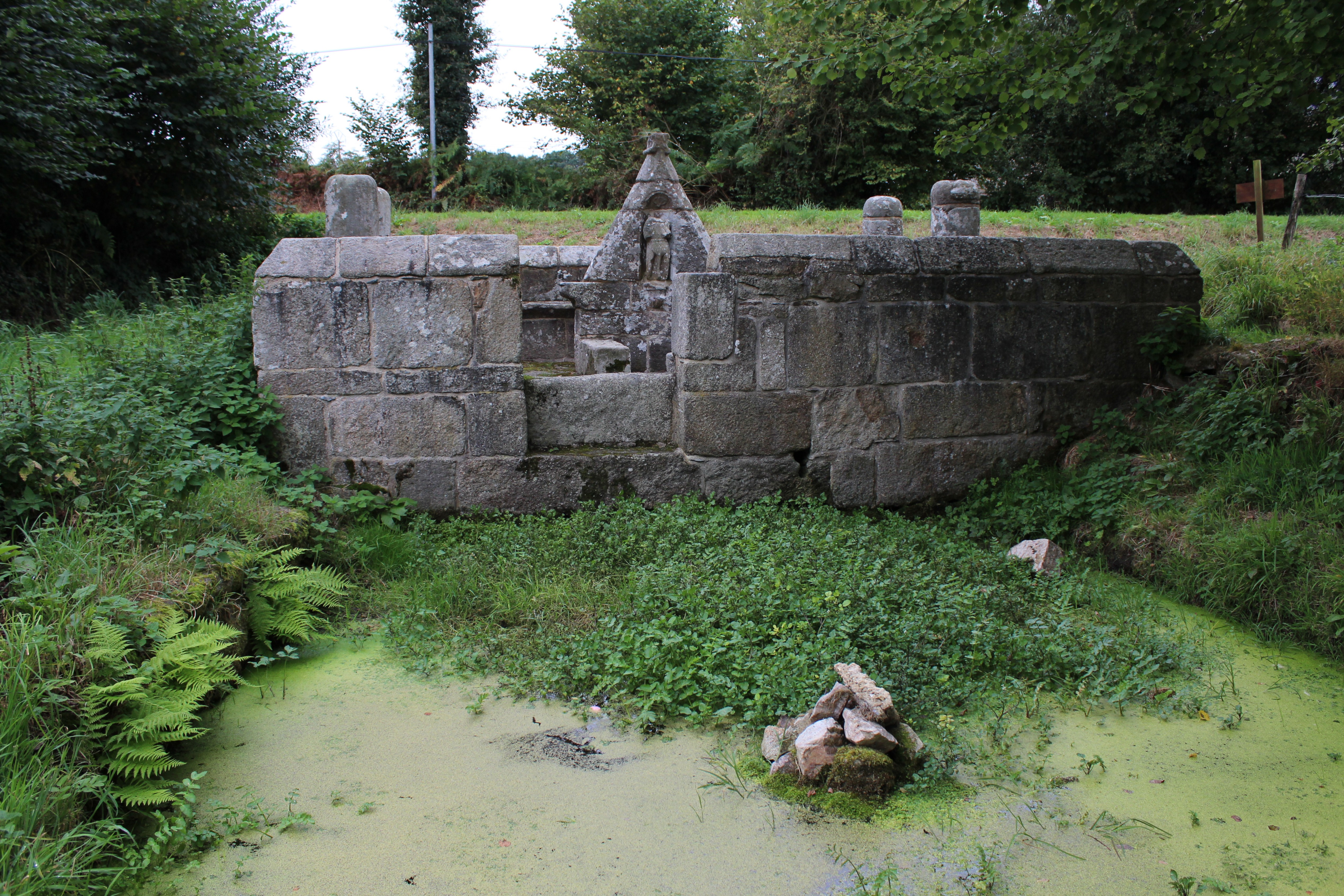
Fontaine Saint‑Jean – A Hidden Gem in the Heart of Brittany
Discover the charm of Plouaret’s historic fountain, the perfect stop for any Brittany itinerary.
Introduction
If you think the magic of Brittany lives only in its rugged coastline, medieval towns, and crepes‑filled cafés, think again. Tucked away in the quiet commune of Plouaret, the Fontaine Saint‑Jean offers travelers a moment of serene beauty and a glimpse into the region’s rich water‑culture heritage. This modest stone fountain may not boast the grandeur of Parisian monuments, but its tranquil presence, historic roots, and idyllic setting make it a must‑see for anyone exploring north‑west France.
Whether you’re a seasoned road‑tripper hunting off‑the‑beaten‑path sights, a history buff fascinated by Breton architecture, or simply a wanderer looking for a peaceful spot to pause, Fontaine Saint‑Jean promises an authentic slice of French countryside charm.
About Fontaine Saint‑Jean
A Brief Description
Located at 48.597640, -3.474135 in the centre of Plouaret, Fontaine Saint‑Jean is a traditional Breton fountain built from locally sourced stone. While the exact height and altitude of the structure remain undocumented, the fountain’s simple yet elegant basin, carved water spout, and surrounding stone paving are characteristic of the region’s communal water sources dating back to the 19th century.
The fountain’s name—Saint‑Jean—reflects the common practice of dedicating public water points to saints, a tradition that intertwined religious reverence with everyday life. Though modest in size, the fountain once served as a vital gathering place where locals fetched drinking water, washed clothes, and exchanged news.
Historical Significance
In rural Brittany, fountains like Saint‑Jean were more than utilitarian fixtures; they were social hubs and symbols of communal identity. While specific archival records for this particular fountain are scarce, its construction likely aligns with the wave of public works undertaken during the Second French Empire (1852‑1870), when many municipalities invested in clean water infrastructure.
The stonework exhibits the typical Breton granite craftsmanship that can be seen throughout the Côtes d'Armor department. Over the decades, the fountain has survived wars, agricultural modernization, and the shift to indoor plumbing, standing today as a quiet testament to Plouaret’s enduring connection to its natural resources.
Why It Matters
- Cultural heritage: Fontaine Saint‑Jean embodies the historic relationship between Breton communities and their water sources.
- Architectural authenticity: Its stone design showcases traditional regional masonry techniques.
- Community spirit: The fountain remains a beloved landmark for locals, often featured in municipal events and seasonal celebrations.
For travelers seeking genuine French heritage beyond the usual tourist hotspots, this fountain offers a tangible link to Brittany’s past.
How to Get There
By Train
Plouaret is served by the Gare de Plouaret-Trégor, a stop on the high‑speed TGV line between Paris and Brest. From Paris Montparnasse, the journey takes roughly 3.5 hours. Once you arrive, the fountain is a short 10‑minute walk from the station—just follow the signs toward the town centre and you’ll spot the stone basin near the main square.
By Car
Driving gives you the most flexibility to explore the surrounding countryside:
- From Rennes: Take the N12 westward toward Saint‑Brieuc, then exit onto the D786 toward Plouaret. The drive is about 1 hour 30 minutes (≈120 km).
- From Brest: Follow the N12/E60 eastward; the route is roughly 2 hours (≈150 km).
Parking is available in the municipal lot just off Rue de la Fontaine, a stone’s throw from the fountain.
By Bus
Regional bus lines (e.g., Keolis Breizh) connect Plouaret with nearby towns such as Lannion and Saint‑Brieuc. Check the latest schedules on the Bretagne Mobilité website for up‑to‑date routes.
Navigation Tips
- GPS coordinates: 48.597640 N, ‑3.474135 W.
- Landmark: Look for the stone paving and the small bronze plaque that reads “Fontaine Saint‑Jean”.
Best Time to Visit
Brittany’s maritime climate offers mild temperatures year‑round, but the experience at Fontaine Saint‑Jean varies with the seasons:
| Season | Weather | Why Visit |
|---|---|---|
| Spring (Mar‑May) | Pleasant, blooming gardens, occasional rain | The fountain’s surroundings are lush, and local markets are in full swing. |
| Summer (Jun‑Aug) | Warm, occasional sunshine, longer daylight | Ideal for leisurely strolls; the fountain’s stone stays cool for a quick splash. |
| Autumn (Sep‑Nov) | Mild, colorful foliage, fewer tourists | Photographers love the golden light; nearby vineyards begin harvest festivals. |
| Winter (Dec‑Feb) | Cool, occasional storms, quieter streets | A peaceful atmosphere—perfect for reflective moments by the water. |
Tip: The best photo opportunities arise during the golden hour (just after sunrise or before sunset) when the stone glows softly against the Breton sky.
What to Expect
Arriving at Fontaine Saint‑Jean, you’ll be greeted by a tranquil scene: a modest stone basin filled with clear, gently flowing water, framed by a low stone wall and a few benches where locals often sit and chat. The surrounding cobblestones echo the rhythm of passing cyclists and occasional horse‑drawn carts—a reminder of the region’s agrarian roots.
- Atmosphere: Quiet, with a subtle hum of conversation in French and Breton.
- Sights: The fountain’s carved spout, a small plaque commemorating its restoration (if any), and nearby historic houses with slate roofs.
- Sounds: The soft trickle of water, distant church bells, and occasional birdsong.
While the fountain is not a large tourist complex, it serves as an excellent spot for a brief pause, a picnic, or a photo session. Bring a reusable water bottle—you can refill it straight from the fountain (though it’s wise to check local signage for drinking‑water advisories).
Nearby Attractions
Exploring the area around Fontaine Saint‑Jean reveals several other charming sites, all within a short drive or walk:
- [Unnamed Fountain – 1.4 km] – A fellow Breton water feature that showcases similar stonework.
- [Fontaine de Maudez – 2.2 km] – Another historic fountain, known locally for its intricate carvings.
- [Unnamed Fountain – 2.4 km] – A small spring-fed fountain nestled in a quiet lane.
- [Lavoir (spring) – 2.4 km] – A traditional washhouse (lavoir) where villagers once cleaned laundry; the surrounding spring still flows.
- [Unnamed Spring – 3.0 km] – A natural spring offering a peaceful spot for contemplation.
These attractions can be combined into a “Brittany Fountain Trail”—a leisurely half‑day itinerary that lets you soak in the region’s water heritage while enjoying the rolling countryside.
Travel Tips
| Tip | Details |
|---|---|
| Wear comfortable shoes | The streets around Plouaret are cobbled; sturdy footwear ensures a pleasant walk. |
| Bring a rain jacket | Brittany’s weather can change quickly; a lightweight waterproof layer is essential. |
| Respect local customs | The fountain is a functional piece of community infrastructure; avoid littering and keep noise levels low. |
| Try local cuisine | After visiting, head to a nearby crêperie for a traditional Breton galette or sweet crêpe. |
| Check opening hours of nearby attractions | While the fountain is always accessible, some nearby sites (e.g., the lavoir) may have limited visiting times. |
| Use a reusable bottle | Many locals refill from public fountains; it’s eco‑friendly and convenient. |
| Capture the moment | For the best photos, shoot during early morning or late afternoon when the light is soft. |
| Explore on foot or bike | The distances between attractions are short, making cycling a scenic and healthy option. |
Final Thoughts
Fontaine Saint‑Jean may be modest in size, but it encapsulates the soul of Brittany’s rural heritage—a place where water, history, and community converge. By adding this hidden fountain to your travel itinerary, you’ll experience a quieter, more intimate side of France that many tourists overlook.
So pack your camera, hop on the train to Plouaret, and let the gentle sound of flowing water guide you into the heart of Breton charm.
Happy travels, and may your journey be as refreshing as the waters of Fontaine Saint‑Jean!