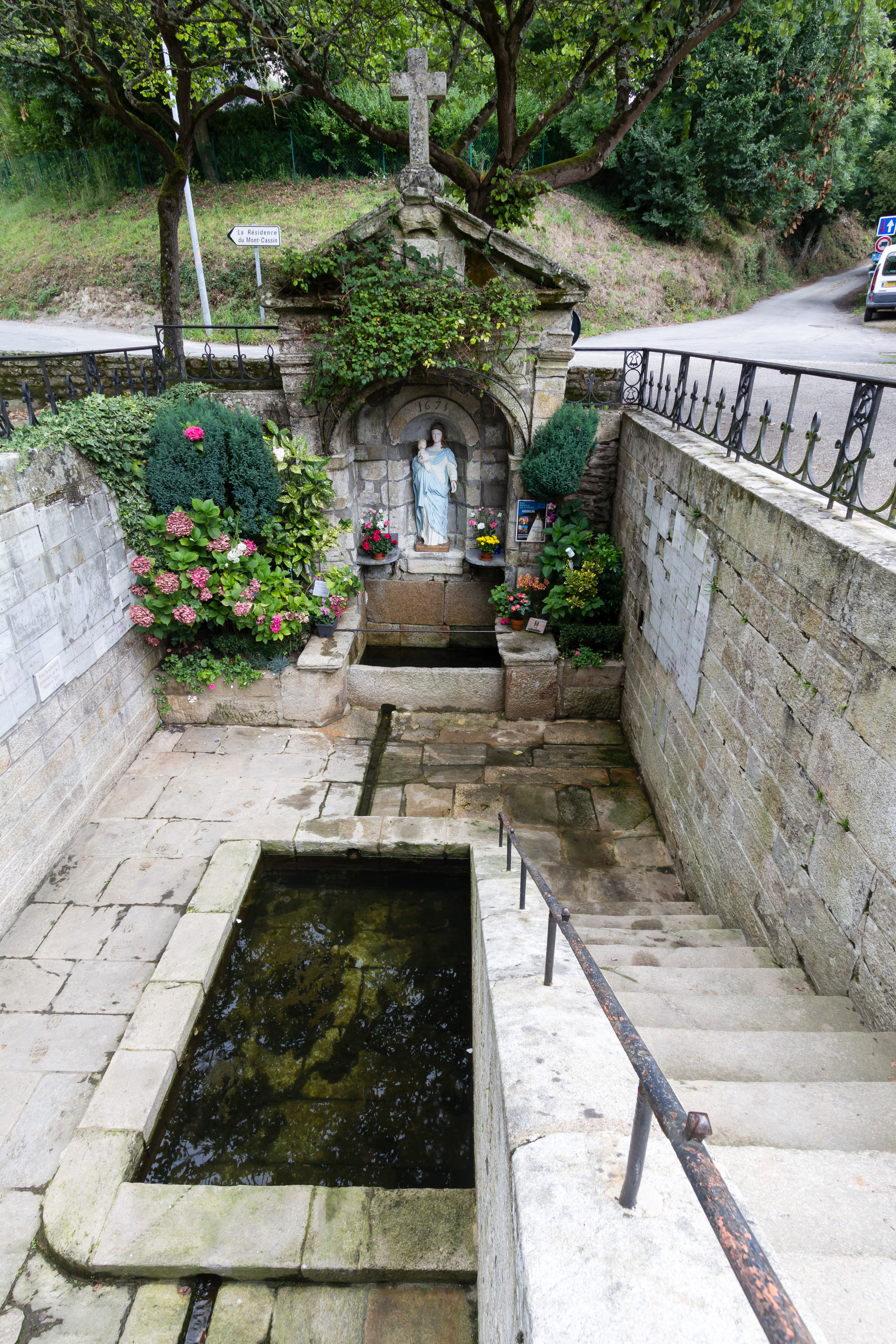
Fontaine de la Vierge – The Miraculous Fountain of Josselin, Brittany
Discover the hidden charm of a centuries‑old fountain that has been drawing pilgrims, photographers, and curious travelers to the heart of Brittany.
1. Introduction
Imagine stepping onto a cobbled square in the historic town of Josselin, feeling the cool mist of a fountain that has whispered legends for generations. The Fontaine de la Vierge, also known as the Fontaine Miraculeuse, is more than just a decorative water feature – it’s a living piece of Breton folklore, a photographic hotspot, and a peaceful oasis in the bustling town centre. Whether you’re mapping a road‑trip through north‑west France, planning a cultural weekend in Brittany, or simply hunting for Instagram‑worthy spots, this miraculous fountain deserves a place on your itinerary.
2. About Fontaine de la Vierge
A Brief Description
Located at 47.953437, -2.543007 in the heart of Josselin, the Fontaine de la Vierge is a modest‑sized stone fountain crowned with a delicate statue of the Virgin Mary. The water springs from a hidden source beneath the basin, creating a gentle, continuous flow that has been celebrated for its purity and “miraculous” properties since the Middle Ages.
Historical Roots
The fountain’s origins trace back to the medieval period when local legend claimed that a pilgrim, lost in a storm, prayed to the Virgin for safety. The next morning, a clear spring emerged where a stone cross now stands, and the water was said to have healed the pilgrim’s wounds. Over the centuries, the site attracted devotees seeking blessings for health, fertility, and safe voyages.
In the 19th century, the town council commissioned the current stone enclosure and the statue that now defines the fountain’s silhouette. While the exact height and altitude of the structure remain undocumented, its modest scale perfectly complements the surrounding historic architecture, especially the nearby Château de Josselin.
Cultural Significance
The Fontaine de la Vierge is more than a tourist attraction; it’s a focal point for local festivals and religious processions. Every year, a small ceremony honors the Virgin’s “miraculous” water, reinforcing the fountain’s role as a spiritual landmark in Breton culture. For visitors, the fountain offers a glimpse into the intertwining of faith, folklore, and everyday life that characterises much of rural France.
3. How to Get There
By Air
The nearest major airport is Rennes–Saint‑Jacques (RNS), about 80 km (50 mi) north of Josselin. From Rennes, you can rent a car or catch a regional train to the town.
By Train
Josselin station sits on the SNCF TER line that connects Nantes, Rennes, and Vannes. Direct services from Nantes take roughly 45 minutes, while Rennes requires a short change at Redon. The station is a 10‑minute walk from the town centre and the fountain.
By Car
Driving through Brittany’s scenic countryside is a pleasure in itself. From the A84 motorway, take the N165 toward Vannes, then follow signs for Josselin (exit 27). Parking is available in the Place du Marché car park, just a few minutes’ stroll to the fountain.
By Bus
Local bus routes (e.g., Bretagne Bus 15) link Josselin with nearby towns such as Vannes, Redon, and Ploërmel. Check the latest timetables on the Brittany Transport website before you travel.
4. Best Time to Visit
| Season | What to Expect | Why It’s Ideal |
|---|---|---|
| Spring (April‑June) | Blooming gardens, mild temperatures, fewer crowds | The fountain’s water glistens under soft sunlight, perfect for photos. |
| Summer (July‑August) | Warm weather, lively town festivals | Evening illuminations of the fountain create a magical atmosphere, though it can be busier. |
| Autumn (September‑October) | Golden foliage, cooler air | The surrounding historic streets take on a warm hue, and the water feels especially refreshing. |
| Winter (November‑March) | Quiet, occasional mist | A serene, almost contemplative setting; the fountain’s gentle flow contrasts with crisp air. |
Pro tip: Visit early in the morning (around 8 am) during peak summer months to avoid crowds and capture the sunrise light on the Virgin’s statue.
5. What to Expect
Sensory Experience
- Sight: The stone basin, the graceful Virgin statue, and the subtle play of light on moving water create a timeless tableau.
- Sound: A soothing, continuous murmur that drowns out city noise, perfect for a moment of reflection.
- Touch: The cool mist on a warm day feels invigorating; some visitors gently dip their fingertips into the water, continuing a centuries‑old tradition.
Photographic Highlights
- Frontal shot of the Virgin statue with the fountain’s arch framing the background.
- Low‑angle close‑up of the water jets, especially at sunrise or sunset when the sky paints vivid colors.
- Nighttime capture of the illuminated fountain, a romantic setting for couples.
Amenities
- Public benches line the square, providing a place to rest.
- Nearby cafés (e.g., Café du Château) offer a quick espresso or a traditional Breton crêpe.
- Restrooms are located in the municipal building a short walk away.
6. Nearby Attractions
While the Fontaine de la Vierge is the star of the show, Josselin and its surroundings boast several other points of interest within walking distance:
| Attraction | Type | Distance | Link |
|---|---|---|---|
| Fontaine Notre-Dame du Roncier | Spring | 0 km (right next door) | Google Search |
| Unnamed Spring | Spring | 0 km | Google Search |
| Local Waterfall | Waterfall | 0.3 km | Google Search |
| Fontaine Lafargue | Fountain | 0.4 km | Google Search |
| Unnamed Fountain | Fountain | 0.4 km | Google Search |
Bonus Spot: The majestic Château de Josselin, a 15th‑century medieval castle, sits just a few minutes away. Its towers, gardens, and museum provide a deeper dive into Breton history.
7. Travel Tips
| Tip | Details |
|---|---|
| Dress Comfortably | Cobblestones can be uneven; wear sturdy shoes. |
| Carry a Small Bottle | While the fountain’s water is historically “miraculous,” it’s not recommended for drinking without checking local advisories. |
| Respect Local Customs | If you see a small altar or candles near the fountain, treat the area with reverence. |
| Check Opening Hours | The square is public 24/7, but nearby cafés may close early in winter. |
| Currency | France uses the Euro (€). Most places accept cards, but keep some cash for small vendors. |
| Language | French is the primary language; a few Breton phrases (e.g., “Demat” – good morning) are appreciated by locals. |
| Stay Connected | Free Wi‑Fi is available at the municipal library a short walk away; perfect for uploading your photos. |
| Safety | The area is generally safe, but keep an eye on personal belongings, especially during festivals. |
| Seasonal Events | Look up the Fête de la Vierge (usually in early September) for a unique cultural experience. |
Final Thought
The Fontaine de la Vierge may not be the largest monument in Brittany, but its blend of history, spirituality, and simple beauty makes it a must‑see for any traveler exploring north‑west France. Pair it with a stroll through Josselin’s medieval streets, a bite of savory galette, and a visit to the nearby chateau, and you’ll leave with a truly immersive Breton experience.
Ready to add this miraculous fountain to your travel bucket list? Pack your camera, follow the directions above, and let the gentle flow of the Fontaine de la Vierge inspire your next adventure.
Keywords: Fontaine de la Vierge, Josselin fountain, Brittany travel guide, France attractions, miraculous fountain, things to do in Josselin, historic fountains in France, Breton folklore, travel tips Brittany