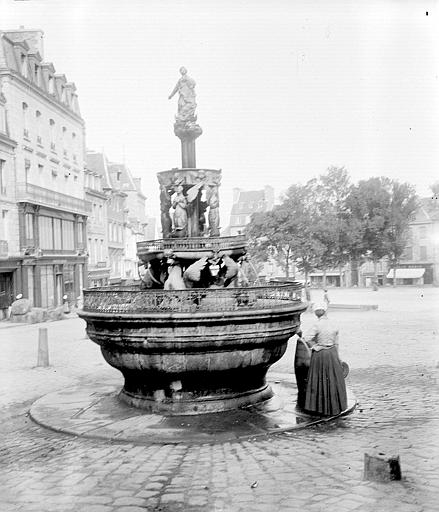
Fontaine de La Pompe – A Hidden Jewel in Guingamp, Brittany
Discover the charm of a modest yet captivating fountain tucked away in the heart of Brittany. Whether you’re a history buff, a photography enthusiast, or simply wandering off the beaten path, Fontaine de La Pompe offers a quiet moment of wonder in the lively town of Guingamp.
1. Introduction
When you think of Brittany, images of rugged coastlines, medieval castles, and crepes drifting from bustling cafés often come to mind. Yet, some of the region’s most memorable experiences are found in its small, everyday spaces. One such place is Fontaine de La Pompe, a modest stone fountain that has quietly served locals for generations. Nestled at the crossroads of Guingamp’s historic centre, this fountain is more than just a water source—it’s a living piece of the town’s cultural tapestry.
If you’re planning a trip to north‑west France and want to add a touch of authentic Breton atmosphere to your itinerary, keep reading. We’ll explore the fountain’s story, how to reach it, the best time to visit, and the surrounding attractions that make this corner of Brittany worth a pause.
2. About Fontaine de La Pompe
Description
Fontaine de La Pompe (sometimes referred to as Fontaine de la Plomée) is a stone basin set into a low, ornamental pedestal. Water gently spills from a simple spout, creating a soft, rhythmic sound that blends with the murmur of nearby cobblestones. The fountain’s design is understated—no elaborate statues or gilded trims—yet its weathered stone tells a tale of centuries of use.
History & Significance
While the exact construction date of Fontaine de La Pompe remains undocumented, its presence is recorded in the French Wikipedia entry for the fountain1. Historically, fountains like this were essential for providing clean drinking water to townspeople before modern plumbing. In Guingamp, the fountain also acted as a communal gathering point, where merchants, artisans, and families would meet while fetching water.
Over time, the fountain became a subtle landmark, marking the transition between the bustling market square and quieter residential streets. Today, it stands as a reminder of Guianic life before the age of electricity, embodying the heritage of Breton public works and the town’s commitment to preserving its historic streetscape.
Cultural Role
Local festivals occasionally incorporate the fountain into their routes, and it is a popular backdrop for wedding photos and Instagram snapshots. Its location near the town centre makes it a convenient stop for tourists exploring Guingamp’s medieval architecture, such as the Saint-Étienne Church and the Château de Guingamp.
3. How to Get There
By Air
- Nearest airports: Rennes–Saint-Jacques (RNS) – about 80 km away, and Brest Bretagne Airport (BES) – roughly 150 km away. Both airports have regular connections to Paris, London, and other European hubs.
By Train
- SNCF services: Guingamp station lies on the Paris‑Brest line and is served by TGV (high‑speed) and TER (regional) trains. From Paris Montparnasse, the journey takes about 3 hours.
From the Station to the Fountain
- Exit Guingamp station onto Rue du Pont.
- Walk north on Rue du Pont (≈300 m) until you reach Place du Champ de la Ville.
- Turn left onto Rue de la Fontaine – the street name itself hints at the nearby water feature.
- After about 150 m, you’ll spot Fontaine de La Pompe on the right-hand side, just before the intersection with Rue de la Barrière.
The walk is flat and takes roughly 5‑7 minutes. If you prefer not to walk, local bus line C2 stops a few meters from the fountain (stop: Fontaine de La Pompe).
By Car
- Parking: Guingamp’s municipal car park Parking du Centre (located on Rue du Château) is a 5‑minute walk from the fountain. Street parking is also available on surrounding streets, but be mindful of resident‑only zones (marked “Résident”).
GPS Coordinates
- Latitude: 48.561938
- Longitude: -3.151766
Enter these coordinates into any navigation app for precise guidance.
4. Best Time to Visit
| Season | Weather | Why Visit |
|---|---|---|
| Spring (Mar‑May) | Mild temperatures (12‑18 °C), blooming gardens | The fountain’s stone glistens after the occasional rain, and the surrounding streets are alive with market stalls. |
| Summer (Jun‑Aug) | Warm (20‑25 °C), occasional showers | Longer daylight hours let you linger for photos; the nearby cafés spill onto terraces, perfect for a cool drink after admiring the fountain. |
| Autumn (Sep‑Nov) | Cool (10‑16 °C), colorful foliage | Fewer tourists, golden light enhances the stone’s texture, and local harvest festivals often pass nearby. |
| Winter (Dec‑Feb) | Cold (5‑10 °C), occasional frost | The fountain takes on a serene, almost mystical quality when mist hangs over the cobbles; ideal for quiet contemplation. |
Peak recommendation: Late spring to early autumn (May‑September) for comfortable weather and vibrant town life. However, if you enjoy a tranquil atmosphere and don’t mind cooler temperatures, winter offers a unique, less‑crowded experience.
5. What to Expect
Arriving at Fontaine de La Pompe feels like stepping into a living postcard. The fountain’s stone basin is framed by historic façades, many of which display traditional Breton half‑timbers and pastel plaster. As the water flows, a gentle mist rises, cooling the air on warm days.
Sensory highlights:
- Sound: A soft, continuous splash that masks the occasional chatter of passers‑by.
- Sight: Sunlight catching the water droplets creates a sparkling effect, especially during golden hour (just before sunset).
- Smell: Freshly cut herbs from nearby market stalls mingle with the faint scent of river water.
Visitors often pause to snap photos, read the engraved plaque (if present), or simply sit on a nearby bench to watch locals gather for a quick chat. The fountain’s modest size encourages intimate moments rather than grand spectacles, making it perfect for couples, families, and solo travelers seeking a quiet pause.
6. Nearby Attractions
While Fontaine de La Pompe is a highlight on its own, the surrounding area offers several complementary sites that can fill a half‑day itinerary. All distances are walking distance from the fountain.
| Attraction | Distance | Type | Quick Note |
|---|---|---|---|
| Unnamed Fountain #1 | 0.1 km | Fountain | A tiny historic water source just around the corner; great for a quick photo series. |
| Unnamed Fountain #2 | 1.4 km | Fountain | Slightly larger, located near the town’s weekly market. |
| Unnamed Fountain #3 | 1.8 km | Fountain | Set in a small garden, perfect for a peaceful sit‑down. |
| Fontaine Saint‑Gilles | 1.8 km | Fountain | Known for its decorative stone carvings; a short stroll through the old quarter leads you there. |
| Local Weir (Barrage) | 2.3 km | Weir | Offers scenic river views and a walking trail along the River Leff. |
Tip: Use a map app to locate these spots; most are marked as “fontaine” or “barrage” in French. The proximity of multiple fountains reflects Guingamp’s historic reliance on communal water sources—a theme that adds depth to your exploration.
7. Travel Tips
| Tip | Details |
|---|---|
| Bring a reusable water bottle | While the fountain’s water is not intended for drinking, you’ll find plenty of cafés nearby to refill. |
| Wear comfortable shoes | The cobblestone streets can be uneven, especially after rain. |
| Check local market days | Guingamp’s market (usually Wednesdays and Saturdays) adds vibrant stalls near the fountain, creating a lively atmosphere. |
| Photography | Early morning or late afternoon light yields the best contrast on the stone. A polarizing filter can reduce glare on the water. |
| Language | French is the primary language; a few Breton phrases (e.g., “Demat” – good morning) are warmly received. |
| Safety | The fountain area is well‑lit at night, but keep an eye on personal belongings, as with any tourist spot. |
| Accessibility | The surrounding streets are mostly flat, but the historic paving may be challenging for wheelchair users. Contact the Guingamp tourism office for assistance. |
| Local cuisine | After visiting the fountain, treat yourself to a crêpe salée or galette at a nearby crêperie—perfect for refueling. |
Final Thoughts
Fontaine de La Pompe may not boast towering arches or elaborate statues, but its quiet presence captures the essence of Brittany’s everyday heritage. It invites travelers to slow down, sip a coffee, and listen to the gentle rhythm of water—a simple pleasure that often gets lost in larger tourist itineraries.
Add this hidden gem to your Guingamp travel plan, and you’ll discover that sometimes the most memorable experiences are found in the smallest of places.
-
Wikipedia – Fontaine de la Plomée (French) – https://fr.wikipedia.org/wiki/Fontaine_de_la_Plom%C3%A9e ↩