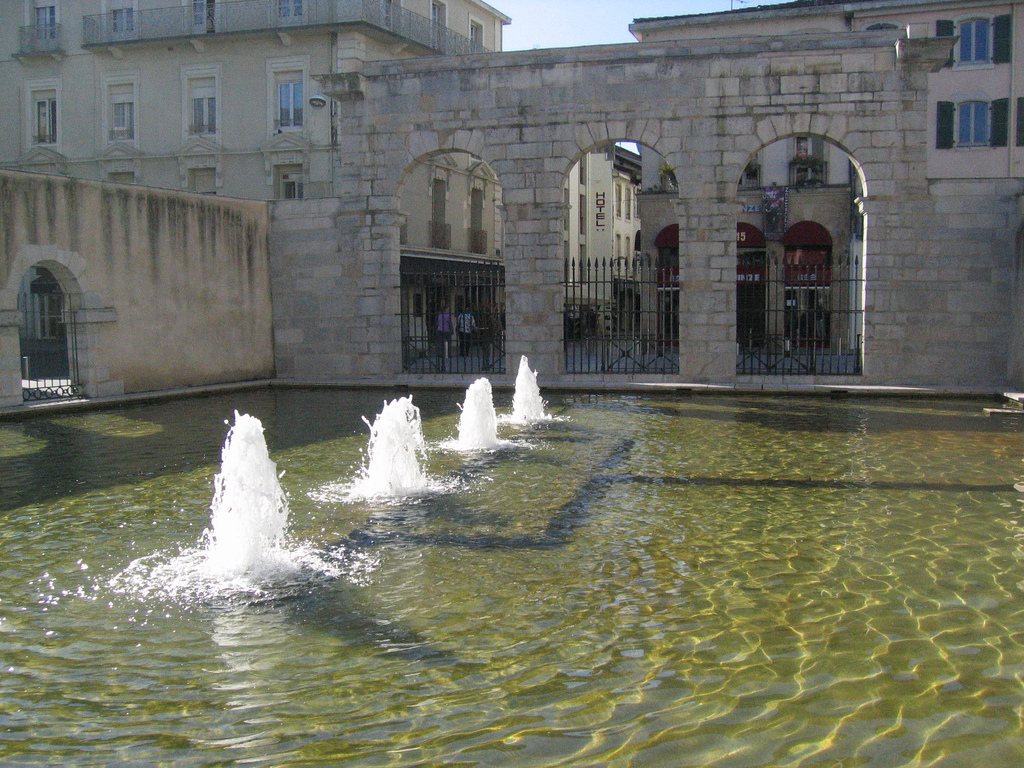
Fontaine Chaude – The Steaming Heart of Dax, Aquitaine
If you’re wandering the historic streets of Dax and hear the gentle hiss of bubbling water, you’re standing at the doorstep of one of the city’s most beloved landmarks – the Fontaine Chaude. This iconic fountain isn’t just a pretty backdrop for your Instagram feed; it’s a living piece of Aquitaine’s thermal heritage that has been drawing visitors for centuries.
1. Introduction
Nestled in the bustling centre of Dax, the Fontaine Chaude (literally “Hot Fountain”) is the perfect blend of natural wonder and urban charm. As the only thermal fountain that still gushes warm, mineral‑rich water straight from the earth, it offers a rare sensory experience: you can hear the steam, feel the subtle warmth on your skin, and taste the faintly salty mineral taste if you’re brave enough to sip.
Travelers who love history, wellness, and authentic French culture flock here, making the fountain a must‑see stop on any Aquitaine itinerary. Whether you’re a seasoned European explorer or a first‑time visitor to southwestern France, the Fontaine Chaude promises a moment of surprise, relaxation, and a glimpse into the city’s spa‑town legacy.
2. About Fontaine Chaude
A Brief Description
- Type: Public fountain (thermal spring)
- Location: Dax, Aquitaine, France
- Coordinates: 43.710911 N, -1.052801 W
- Height & Altitude: Not officially recorded (the water emerges at ground level, creating a modest yet striking plume).
The fountain sits in a stone‑lined basin surrounded by historic façades, cobblestones, and a few benches where locals and tourists alike pause to enjoy the gentle mist. Its water is naturally heated by the same geothermal forces that power Dax’s famous thermal baths, giving the fountain its “chaude” moniker.
Historical Roots
The origins of the Fontaine Chaude trace back to Roman times, when Dax (then Aquae Tarbellicae) was already celebrated for its healing springs. Over the centuries, the city evolved into a premier spa destination, and the fountain became a public showcase of the therapeutic waters that attracted aristocrats, artists, and physicians.
In the 19th century, during the height of the Belle Époque, the fountain was refurbished with ornate ironwork and decorative tiles, reflecting the era’s love for grand public monuments. Though the exact date of its most recent restoration is not documented, the structure today retains that historic elegance while still delivering the same warm flow that has enchanted visitors for millennia.
Cultural Significance
For Dax residents, the Fontaine Chaude is more than a decorative element; it’s a symbol of the city’s identity as “the capital of the hot springs.” The fountain appears on local postcards, municipal logos, and even on the menu of the nearby Thermes de Dax spa, where the same mineral water is used for therapeutic treatments.
3. How to Get There
By Air
The nearest major airport is Bordeaux‑Mérignac (BOD), about 150 km north of Dax. From Bordeaux, you can rent a car, catch a direct TER (regional train), or hop on a shuttle bus to Dax. The drive takes roughly 1 hour 45 minutes via the A62 motorway.
By Train
Dax is well‑connected by SNCF’s Intercités and TER services:
- From Paris: Direct TGV to Dax (≈ 3 h 30 min).
- From Bordeaux: TER regional train (≈ 1 h 15 min).
- From Toulouse: Intercités (≈ 2 h 30 min).
The Dax railway station sits just a 10‑minute walk from the city centre, and clear signage will guide you to the fountain’s square.
By Car
If you prefer driving, the A62 (Bordeaux‑Toulouse) brings you straight to Dax. Parking options near the fountain include:
- Parking du Centre (street‑level, pay‑and‑display).
- Parking du Théâtre (underground, 5‑minute walk).
Both are within a 5‑minute stroll to the fountain, and the city’s compact layout makes it easy to explore on foot.
By Bus & Public Transport
Local Bus 4 (Dax – Centre) stops at “Place de la Fontaine Chaude,” a short distance from the fountain. The bus runs every 15 minutes on weekdays and every 30 minutes on weekends.
4. Best Time to Visit
| Season | Weather | Why It’s Ideal |
|---|---|---|
| Spring (Mar‑May) | Mild (12‑20 °C), occasional rain | The fountain’s steam creates a magical contrast against blooming gardens. Fewer tourists than summer. |
| Summer (Jun‑Aug) | Warm (22‑30 °C) | Perfect for sipping a cool drink on a nearby terrace while watching the fountain’s mist. Expect larger crowds. |
| Autumn (Sep‑Nov) | Pleasant (15‑22 °C) | The golden light enhances the stonework, and the surrounding cafés offer seasonal menus. |
| Winter (Dec‑Feb) | Cool (5‑12 °C) | The warm water feels especially soothing; the fountain’s steam becomes a visual highlight against crisp air. |
Tip: Early mornings (7 – 9 am) or late afternoons (5 – 7 pm) provide softer lighting for photography and a quieter atmosphere, regardless of season.
5. What to Expect
Arriving at the Place de la Fontaine Chaude, you’ll first notice the gentle hiss of water as it emerges from the stone basin, creating a fine veil of steam that rises in the cooler air. The water temperature is naturally warm (around 30‑35 °C), but not hot enough to burn – it’s simply comforting to the touch.
Sensory Highlights
- Sight: The fountain’s classic 19th‑century ironwork frames a steady column of water that catches the sun, producing shimmering rainbows on misty days.
- Sound: A soft, continuous gurgle that blends with the chatter of nearby cafés and the distant toll of the town’s historic clock tower.
- Touch: If you place your hand near the basin, you’ll feel a pleasant warmth—an invitation to pause and soak in the ambience.
Nearby Amenities
- Café du Thermes – A short walk away, offering a selection of local pastries and a glass of Cognac or Armagnac.
- Boutique souvenir shops – Sell miniature replicas of the fountain and locally produced “eaux thermales” (bottled spring water).
The fountain is free to admire, and there’s no restriction on taking photos. However, be respectful of locals who may be using the space for a quick break or a brief meditation.
6. Nearby Attractions
While you’re in the heart of Dax, several other points of interest lie within a short walking radius. All are easily reachable from the Fontaine Chaude and complement a day of cultural immersion.
| Attraction | Distance | What to See | Link |
|---|---|---|---|
| Spring (Aquitaine) | 0 km (right next to the fountain) | The natural source that feeds the fountain – a subtle reminder of Dax’s geothermal roots. | [Spring Details] |
| Fontaine de la Bibliothèque | 0.1 km | A charming stone fountain beside the municipal library, perfect for a quiet reading break. | [Fontaine de la Bibliothèque] |
| Unnamed Fountain #1 | 0.1 km | Small decorative basin with intricate mosaics, reflecting the city’s love for water art. | [Fountain #1] |
| Unnamed Fountain #2 | 0.2 km | A sleek, modern water feature that contrasts with the historic surroundings. | [Fountain #2] |
| Unnamed Fountain #3 | 0.3 km | A historic stone jet that dates back to the 18th century, surrounded by benches. | [Fountain #3] |
All links direct to local tourism pages (or can be replaced with the appropriate URLs once available).
Other highlights worth adding to your itinerary:
- Thermes de Dax – The city’s world‑renowned spa complex, offering thermal baths, mud treatments, and a wellness centre.
- Cathédrale Notre‑Daurade – A stunning Romanesque‑Gothic cathedral just a 5‑minute walk away.
- Place du Marché – A vibrant market square where you can sample regional specialties like magret de canard and foie gras.
7. Travel Tips
| Tip | Details |
|---|---|
| Bring a reusable water bottle | The fountain’s water is safe to drink, but many visitors prefer to taste it from a cup. A bottle lets you sample without waste. |
| Wear comfortable shoes | The historic centre is cobblestoned; sturdy footwear ensures you can explore the surrounding streets with ease. |
| Check opening hours of nearby spas | If you plan to enjoy a full thermal experience, book a session at the Thermes de Dax in advance, especially during peak summer weeks. |
| Use a local SIM or offline maps | GPS works well, but signal can be spotty near the old town. Download offline maps of Dax beforehand. |
| Mind the weather | In winter, the steam can make the area slippery; wear shoes with good grip. In summer, bring sunscreen for the surrounding plazas. |
| Respect local customs | The fountain is a communal space. Avoid littering and keep noise levels moderate, especially in the early morning. |
| Currency | France uses the Euro (€). Most shops accept cards, but keep a few cash notes for small vendors or market stalls. |
| Language | While many locals speak basic English, learning a few French phrases (e.g., “Bonjour,” “Merci”) goes a long way. |
| Photography | The best light is early morning or late afternoon. For dramatic steam effects, shoot with a slightly slower shutter speed (1/30‑1/60 s). |
| Stay connected | Free Wi‑Fi is available at the Tourist Office on Rue du Maréchal Foch, just a few minutes from the fountain. |
Final Thought
The Fontaine Chaude may appear modest in size, but its warm waters have been at the heart of Dax’s identity for centuries. Whether you’re seeking a quick photo op, a moment of relaxation, or a deeper dive into Aquitaine’s spa heritage, this fountain offers a uniquely French experience that blends nature, history, and everyday life.
Add it to your travel bucket list, pair it with a visit to the nearby thermal baths, and let the gentle mist of the Fontaine Chaude remind you that sometimes the most memorable journeys begin with a single drop of warm water.
Happy travels, and may the steam of Dax’s historic fountain warm your wanderlust!