Vogeltränke‑Brunnen – Vienna’s Secret Bird‑Friendly Fountain
If you think Vienna is only about grand palaces and coffee houses, you haven’t discovered the city’s hidden water‑world. Tucked away on the banks of the Danube, the Vogeltränke‑Brunnen (literally “bird‑drinking fountain”) offers a tranquil pause for both feathered visitors and curious travelers.
1. Introduction
Vienna is a city of music, art, and imperial history, but it also hides a network of charming fountains that blend functionality with design. The Vogeltränke‑Brunnen is one of those understated gems. Unlike the ornate baroque fountains of the city centre, this modest stone basin serves a very practical purpose: it provides fresh water for the birds that call the Danube Island (Donauinsel) home.
Whether you’re a bird‑watcher, a photography enthusiast, or simply someone looking for a peaceful spot away from the tourist crowds, the Vogeltränke‑Brunnen invites you to slow down, listen to the gentle splash of water, and enjoy a slice of Viennese nature. In this guide we’ll explore the fountain’s background, how to reach it, the best time to visit, what you’ll experience on site, and the other attractions that lie just a short stroll away.
2. About Vogeltränke‑Brunnen
- Location: Donauinsel, 1220 Vienna, Austria
- Coordinates: 48.204508 N, 16.378717 E
- Type: Functional bird‑drinking fountain (public water feature)
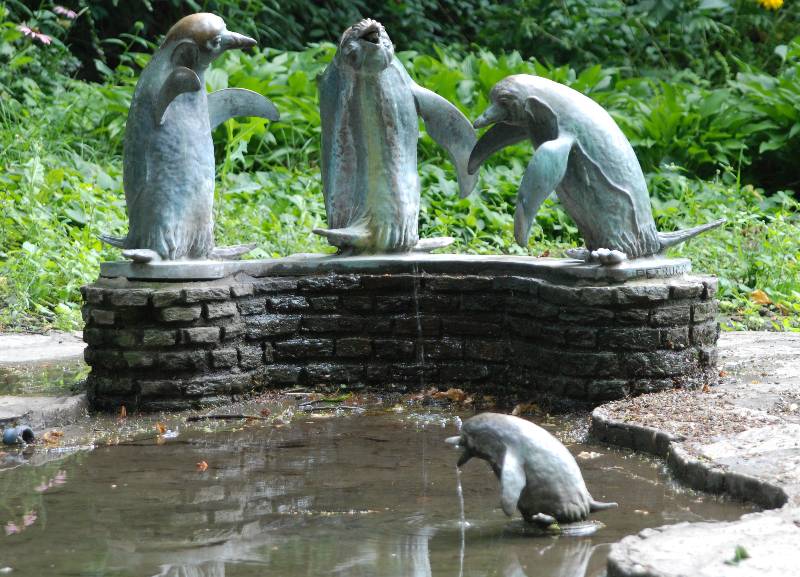
The Vogeltränke‑Brunnen was installed as part of the city’s ecological initiatives to support urban wildlife along the Danube. While the exact year of construction isn’t widely documented, the fountain reflects Vienna’s long‑standing commitment to integrating green infrastructure into public spaces.
The design is deliberately simple: a low‑lying stone basin fed by a continuous, filtered water flow. Its height and dimensions are not officially published, which adds to its modest, almost “invisible” charm. The water is kept clean year‑round, making it a reliable source for sparrows, swallows, and even the occasional kingfisher that darts over the Danube’s calm surface.
Beyond its practical role, the fountain is a subtle piece of urban art. Its stone texture blends seamlessly with the surrounding riverbank, while the gentle sound of flowing water creates a calming backdrop for joggers, cyclists, and families picnicking on the island.
3. How to Get There
By Public Transport
| Mode | Line | Stop | Walking Time |
|---|---|---|---|
| U‑Bahn | U1 (Line U1) | Donauinsel station | ~5 minutes |
| Tram | 2 or 2A | Donauinsel (tram stop) | ~5 minutes |
| Bus | 20A, 30A, 38A | Donauinsel (bus stop) | ~5 minutes |
The Donauinsel station sits right at the heart of the island’s recreational zone. From the exit, follow the signs for “Wiener Donau – Freizeitpark.” A short, well‑marked path leads you past a playground, past the iconic Donauweibchen‑Brunnen, and finally to the Vogeltränke‑Brunnen.
By Bike or Foot
Vienna’s extensive bike‑lane network makes the island a favorite spot for cyclists. If you’re staying in the city centre, you can ride along the Danube Cycle Path (Donau Radweg) and enter the island via the Reichsbrücke or Schwedenbrücke bridges. The fountain is located near the northern stretch of the island, roughly 3 km from the city centre—perfect for a leisurely half‑hour ride.
By Car
Parking on Donauinsel is limited but available at several designated lots near the Kaisermühlen and Nussdorf entrances. From the parking area, follow the pedestrian signs toward the “Vogeltränke‑Brunnen” – the walk is less than 10 minutes.
4. Best Time to Visit
| Season | Why Visit? |
|---|---|
| Spring (April–June) | Migratory birds return, making the fountain a lively bird‑watching spot. The surrounding park blossoms with cherry trees and wildflowers. |
| Summer (July–August) | Warm days attract families to the island’s beaches and swimming areas. Evening concerts on the Danube Island often start nearby, giving you a chance to combine culture with nature. |
| Autumn (September–October) | The foliage turns golden, providing a picturesque backdrop for photos. The water flow remains steady, and the crowds thin out. |
| Winter (November–March) | While the fountain may be partially iced, the serene, snow‑covered landscape offers a quiet, contemplative experience. The nearby Donauinsel Ice Skating Trail (when open) adds a seasonal twist. |
Overall, late spring to early autumn is the sweet spot for bird activity and comfortable weather, but the fountain is accessible year‑round.
5. What to Expect
Arriving at the Vogeltränke‑Brunnen feels like stepping into a miniature oasis. The stone basin sits low to the ground, allowing birds of all sizes to sip freely. A gentle cascade creates a soft, soothing sound that masks the occasional city hum beyond the island’s green belt.
Visuals: The water’s surface reflects the sky, often catching the pastel hues of sunrise or sunset. In summer, the surrounding grass is a vivid green, dotted with picnickers and cyclists.
Sounds: Beyond the water, you’ll hear rustling leaves, distant laughter from nearby playgrounds, and, of course, the chirping of birds.
Activities:
- Bird‑watching: Bring a pair of binoculars and a field guide. Look for sparrows, starlings, and the occasional European kingfisher.
- Photography: The fountain’s simplicity makes it an excellent subject for minimalist photography. Capture reflections, silhouettes at dusk, or macro shots of water droplets on stone.
- Relaxation: Sit on the nearby bench, sip a coffee from a local kiosk, and enjoy the rhythmic flow—perfect for a quick meditation break.
Because the fountain is functional rather than ornamental, there are no admission fees, guided tours, or strict opening hours. It is open to the public 24 hours a day, though lighting is limited after dark, so a flashlight or phone torch can be handy for evening visits.
6. Nearby Attractions
The Donauinsel area is a compact hub of water‑related art and recreation. Within a 0.2 km radius of the Vogeltränke‑Brunnen you’ll find several other charming fountains and points of interest, each with its own story.
| Attraction | Distance | What to See |
|---|---|---|
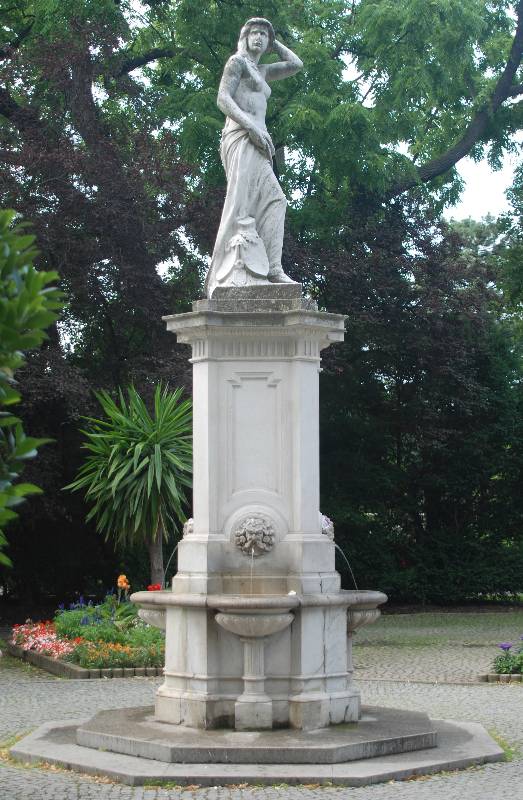
| Donauweibchen‑Brunnen | 0.1 km | A whimsical bronze sculpture of the “Danube Maidens” that celebrates local folklore. |
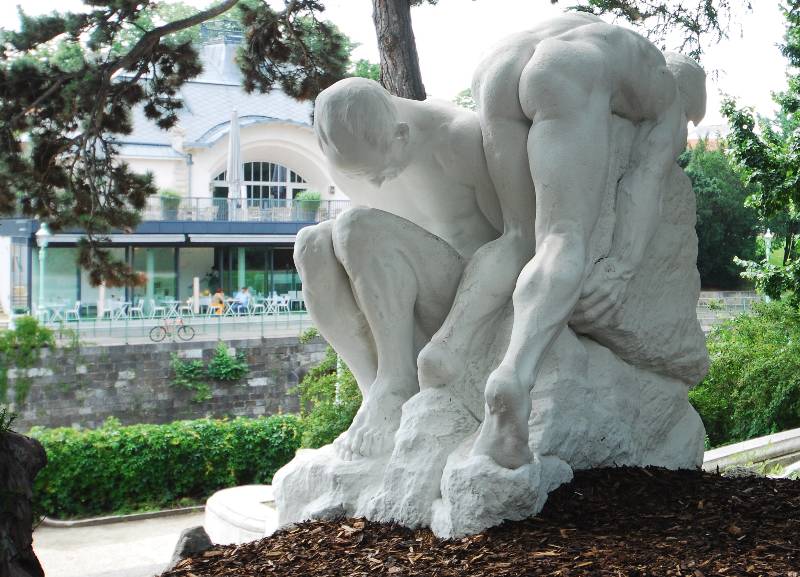
| Befreiung der Quelle‑Brunnen | 0.2 km | A modernist stone fountain symbolising the “Liberation of the Spring.” |
| Sebastian‑Kneipp‑Brunnen | 0.2 km | Dedicated to the 19th‑century hydro‑therapist Sebastian Kneipp; features a series of small jets for therapeutic walking. |
| Basiliskenbrunnen | 0.2 km | A playful fountain with serpentine water streams, reminiscent of the mythical basilisk. |
| Labetrunkbrunnen | 0.2 km | A quirky “Lab Drink” fountain that combines art and science with a kinetic water display. |
All of these sites are reachable on foot within a few minutes, making the area perfect for a relaxed self‑guided walking tour. You can map them using the coordinates above or simply follow the well‑signposted paths that loop around the island’s central promenade.
7. Travel Tips
- Bring a reusable water bottle – Vienna’s tap water is safe to drink, and you can refill after a stroll.
- Pack binoculars or a smartphone with a good zoom lens if bird‑watching is on your agenda.
- Wear comfortable walking shoes; the island’s paths are a mix of paved lanes and soft grass.
- Check the weather forecast – the Danube can be breezy, especially in spring; a light windbreaker helps.
- Plan a combined visit – start at the Vogeltränke‑Brunnen, then walk north to the Donauweibchen‑Brunnen, and finish with a snack at one of the island’s cafés (e.g., Café Donauinsel).
- Respect the wildlife – keep pets on a leash and avoid feeding the birds directly from your hand to preserve the natural balance.
- Use the Vienna Card or Wiener Linien tickets for unlimited public transport; a day pass covers the U‑Bahn, tram, and bus routes needed to reach Donauinsel.
Wrap‑Up
The Vogeltränke‑Brunnen may not have the gilded statues of Schönbrunn Palace, but it offers a genuine slice of Viennese life where nature, design, and community intersect. It’s a perfect micro‑adventure for travelers seeking authenticity, a quiet spot for reflection, or simply a picturesque backdrop for Instagram.
Next time you find yourself wandering the Danube’s emerald ribbon, pause at the Vogeltränke‑Brunnen, listen to the water’s whisper, and share a moment with Vienna’s feathered residents. You’ll leave with a refreshed mind, a few beautiful photos, and a secret story to tell—one that most guidebooks overlook, but every local explorer cherishes.
Happy travels, and may your Viennese adventures be as fluid and refreshing as the waters of the Vogeltränke‑Brunnen!