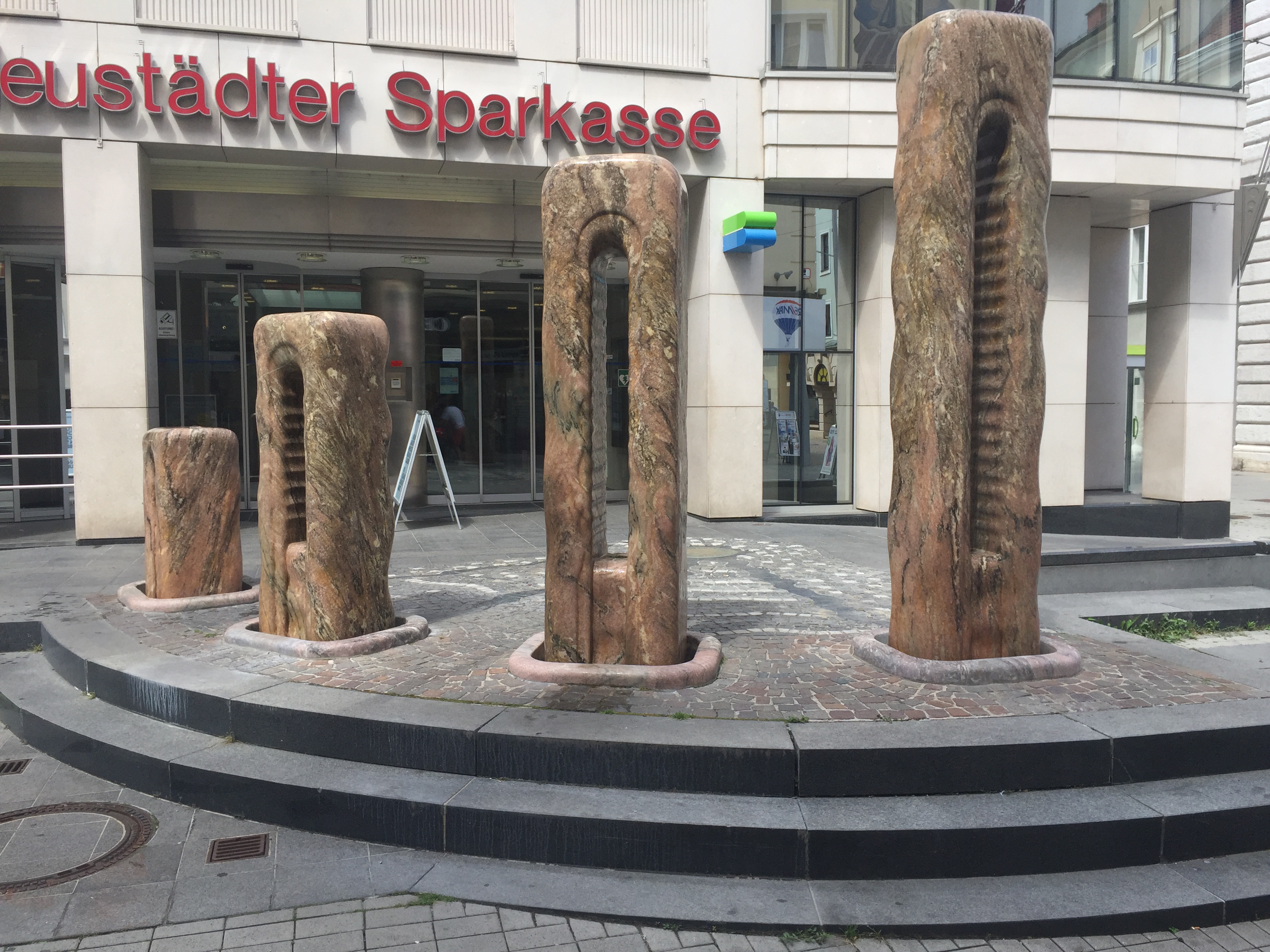
Sparkassenbrunnen – The Charming Fountain of Wiener Neustadt, Lower Austria
Discover the hidden sparkle of Wiener Neustadt’s historic heart, where a modest fountain tells a story of community, architecture, and Austrian charm.
1. Introduction
If you’re wandering through the cobbled streets of Wiener Neustadt, the first thing that catches the eye is often the gentle murmur of water spilling over stone. Nestled in the city centre, Sparkassenbrunnen (literally “Savings Bank Fountain”) is a petite yet captivating landmark that perfectly encapsulates the relaxed pace of Lower Austria. Whether you’re a history buff, a photography enthusiast, or simply looking for a quiet spot to sip a coffee, this fountain offers a perfect pause in a city that blends Baroque grandeur with modern vibrancy.
2. About Sparkassenbrunnen
A Brief Description
Sparkassenbrunnen is a classic Austrian fountain situated at the coordinates 47.812177 N, 16.243734 E in the heart of Wiener Neustadt. While its exact height and altitude remain undocumented, the fountain’s design reflects the modest elegance typical of early‑20th‑century civic works. The stone basin, flanked by ornamental ironwork, draws water from a concealed underground source, creating a soothing ripple that has welcomed locals and travelers for decades.
Historical Roots
The name “Sparkassenbrunnen” points to its original patron: the local Sparkasse (savings bank). In many Austrian towns, banks funded public amenities as a gesture of civic responsibility, and this fountain is a lasting testament to that tradition. Though precise construction dates are scarce, the fountain has been part of Wiener Neustadt’s cityscape since the early 1900s, surviving two world wars and several urban renovations. Its continued presence underscores the community’s respect for heritage and public art.
Cultural Significance
Beyond its functional role, Sparkassenbrunnen serves as a gathering point for festivals, street musicians, and everyday conversations. The gentle sound of water provides a natural backdrop for the city’s weekly markets and seasonal celebrations, making it an integral thread in the social fabric of Wiener Neustadt. For visitors, the fountain offers a glimpse into the Austrian love of public water features—a tradition that dates back to Roman times and continues to shape the aesthetic of towns across Lower Austria.
3. How to Get There
By Train
Wiener Neustadt is well‑connected to Austria’s rail network. The Wiener Neustadt Hauptbahnhof lies just a short 10‑minute walk from Sparkassenbrunnen. From Vienna’s Westbahnhof, direct regional trains (R or S-Bahn) arrive every 30 minutes, making day trips from the capital effortless.
By Car
If you prefer driving, take the A2 (Southern Motorway) toward Graz and exit at Wiener Neustadt Süd. Follow the signs to the city centre; parking is available in several public garages (e.g., Parkhaus Altstadt) within a five‑minute walk to the fountain.
Address for GPS:
Sparkassenbrunnen, 2700 Wiener Neustadt, Austria
(47.812177, 16.243734)
By Bike or On Foot
The city’s compact layout makes Sparkassenbrunnen easily reachable on foot or by bike. The Danube Cycle Path (Donauradweg) passes near the city centre, and local bike‑share stations (e.g., Nextbike) provide convenient rentals.
4. Best Time to Visit
| Season | Why Visit? |
|---|---|
| Spring (April‑May) | Blossoming trees line the streets, and the fountain’s water glistens in the soft sunlight—ideal for photos. |
| Summer (June‑August) | Warm evenings bring outdoor cafés to the square; the fountain’s cool mist offers a refreshing contrast. |
| Autumn (September‑October) | Golden foliage creates a picturesque backdrop; fewer tourists mean a more intimate experience. |
| Winter (November‑March) | Although the fountain may be turned off during extreme cold, the surrounding historic buildings are illuminated, giving a magical, quiet atmosphere. |
Insider tip: The city’s weekly market (held on Tuesdays) is at its liveliest in late spring and early autumn, providing a bustling ambience around the fountain.
5. What to Expect
Arriving at Sparkassenbrunnen, you’ll first notice the subtle sound of flowing water—a calming soundtrack that instantly invites you to linger. The stone basin, polished by years of foot traffic, reflects the surrounding façades of Wiener Neustadt’s Baroque and Jugendstil architecture.
During peak hours, the square fills with locals chatting over coffee, street performers adding a musical flair, and tourists snapping photos of the fountain’s intricate ironwork. The area is pedestrian‑only, allowing you to stroll, sit on nearby benches, or enjoy a pastry from a nearby bakery while watching the water dance.
If you’re a photographer, the fountain offers dynamic composition opportunities: capture reflections at sunrise, the play of shadows at midday, or the warm glow of lanterns after dusk. For history lovers, the surrounding buildings—many dating back to the 16th century—provide context to the fountain’s role in the city’s evolution.
6. Nearby Attractions
While Sparkassenbrunnen is a highlight on its own, the surrounding neighbourhood brims with additional points of interest—all within a comfortable walking distance:
| Distance | Attraction | Type | Quick Link |
|---|---|---|---|
| 0.1 km | Unnamed Fountain | Fountain | (local map) |
| 0.2 km | Unnamed Fountain | Fountain | (local map) |
| 0.3 km | Moses Brunnen | Fountain | Moses Brunnen on Wikipedia |
| 0.4 km | Unnamed Fountain | Fountain | (local map) |
| 0.4 km | Unnamed Fountain | Fountain | (local map) |
Other Must‑See Sites (within 10 minutes walk):
- St. Georg’s Church – A striking Baroque church with an ornate interior.
- Neustadt Castle (Schloss Wiener Neustadt) – The former residence of the Habsburgs, now a museum.
- City Museum (Stadtmuseum Wiener Neustadt) – Exhibits on local history, including the evolution of public fountains.
- The Old Market Square (Alter Platz) – Hosts the weekly market and seasonal festivals.
7. Travel Tips
| Tip | Details |
|---|---|
| Dress for the Weather | The fountain area is open‑air; bring a light jacket in spring/autumn and a raincoat in summer thunderstorms. |
| Cash for Small Purchases | While most cafés accept cards, some street vendors near the fountain still prefer cash. |
| Respect the Space | Sparkassenbrunnen is a public amenity; avoid climbing on the basin and keep noise levels moderate, especially during early mornings. |
| Photography Etiquette | If you’re using a tripod, be mindful of pedestrians and ask for permission when shooting close‑ups of people. |
| Timing for Quiet | Visit early (before 9 am) or late (after 7 pm) for a more tranquil experience, especially during summer when the square can get lively. |
| Local Language | Basic German phrases (“Bitte”, “Danke”, “Entschuldigung”) go a long way; most locals speak English, especially in tourist areas. |
| Safety | The area is safe day and night, but keep an eye on personal belongings during busy market days. |
| Stay Connected | Free Wi‑Fi is available at the city’s tourist information office (located a few blocks from the fountain). |
Final Thoughts
Sparkassenbrunnen may be modest in size, but it encapsulates the spirit of Wiener Neustadt—a city where history flows as gently as its water features. Whether you’re mapping a comprehensive Lower Austria travel itinerary or simply seeking a quiet corner to unwind, this fountain offers a memorable pause. Pair it with a stroll through the historic centre, a visit to nearby fountains, and a slice of Viennese‑style pastry, and you’ll leave with a deeper appreciation for Austria’s subtle, yet enduring, charm.
Ready to add Sparkassenbrunnen to your bucket list? Pack your camera, slip on comfortable shoes, and let the water guide you through Wiener Neustadt’s timeless streets.